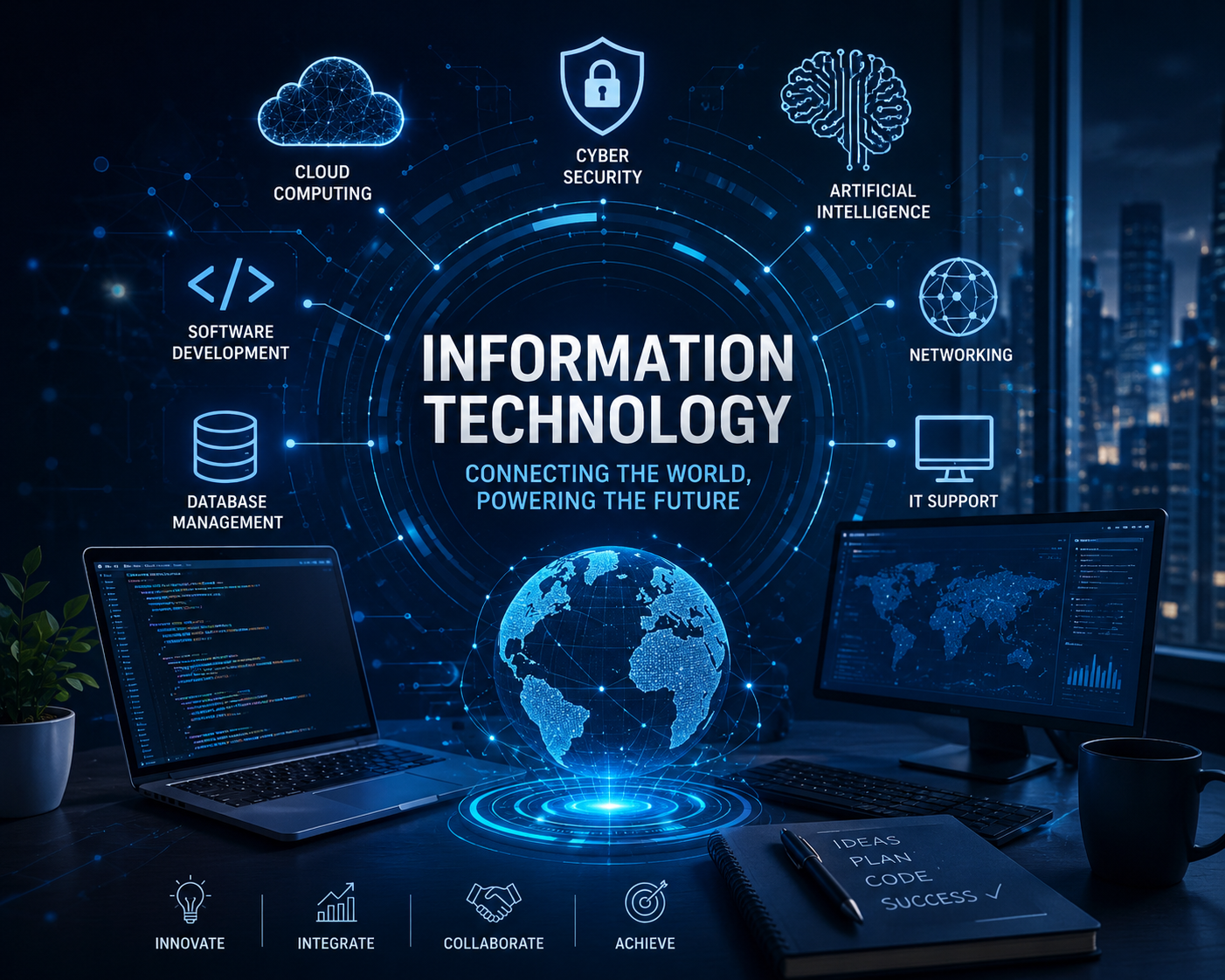
Information Technology (IT): A Complete Guide
Introduction to Information Technology
Information Technology (IT) has become a part of modern life. From smartphones and computers to banking and cloud services technology makes it easier for people to communicate, work, learn and handle daily tasks. Businesses, schools, hospitals and government offices all depend on IT systems to store data boost productivity and provide services.
As the digital world keeps expanding knowing how Information Technology works is more important, than ever. Whether you are a student, a business owner, a worker or someone who loves technology learning about IT can help you see how digital systems function and how they affect our lives.
Google Search Central documentation
What Is Information Technology?
Information Technology is about using computers, software, networks and digital tools to create, handle, store keep safe and share information. It covers all the technologies and services that help people and companies manage data and get things done better.
For example when you send an email save a file online join a video call or pay for something with a phone you are using Information Technology. These systems work together to make communication quicker. Information easier to find.
Information Technology is not, about computers. It also includes databases, servers, security tools, cloud services, mobile apps and network setups. All of these parts come together to support the services that people use every single day.
Major Components of Information Technology
Information technology is made up of key parts that work together to support digital activities. Each part plays a role in making sure systems run smoothly and securely.
1. Computer Hardware
Computer hardware includes all the pieces of a computer or IT system. This covers things like monitors, keyboards, processors hard drives, servers and routers. These parts are the building blocks of any setup. Without hardware there would be no way to run software or store data. Hardware gives the system the power to process information and handle tasks.
2. Software and Applications
Software is the set of instructions that tell a computer what to do. It includes operating systems like Windows or macOS well as programs such as Microsoft Office, web browsers and accounting tools. Applications help users perform tasks like writing documents, managing finances or tracking inventory. Software turns hardware into something by making it easy to work with data and complete jobs.
3. Computer Networks
Computer networks link computers and devices so they can share information. A local area network or LAN connects devices in one building. A wide area network or WAN can connect locations across cities or countries. The internet is the network of all connecting billions of devices globally. Networks allow people to send emails share files and access websites from anywhere.
4. Data Management
Data management is about handling the information that organizations collect. This includes customer names, sales figures, product lists and performance reports. Databases are used to store this data in a way. Tools like SQL or Excel help users find, sort and update information quickly. Good data management makes sure the right data is available at the time and supports smart decisions.
5. Cybersecurity
Cybersecurity is the practice of protecting systems from threats. These threats include hackers, viruses and phishing scams. To stay safe organizations use firewalls, antivirus programs and encryption. They also enforce passwords and limit who can access certain data. Regular updates to software and systems help fix vulnerabilities. Cybersecurity keeps information safe. Builds trust, in digital services.
Types of Information Technology
Information Technology consists of specialized fields each with a unique purpose in the digital world.
Network Administration: Network administrators keep the systems that connect devices and support communication within organizations running smoothly.
Cloud Computing: Cloud technology lets users access computing resources, storage and applications, over the internet of depending only on local hardware.
Information Security: Information Security protects information and helps organizations keep their data confidential, intact and always available.
Software Development: Software developers design, build, test and maintain applications that solve problems and support business needs.
IT Support: IT support professionals troubleshoot problems, install software, configure devices and help users work efficiently.
Data Analytics: Data analytics involves looking at information to find patterns understand performance and help make decisions.
Importance of IT in Modern Business
Information technology is very important for the growth of businesses and for operations. Companies use tools to talk to customers manage workers track sales and make internal processes better.
One big advantage is productivity. Software can do tasks automatically cut down on manual mistakes and let employees finish work faster. For example inventory systems can keep track of stock. Warn businesses when they need to reorder.
IT also makes communication better. Email, video calls, messaging apps and shared workspaces let teams work together even if they are in places.
Another key benefit is making decisions based on data. Businesses can use analytics tools to learn about how customers act check marketing campaigns and spot chances, for improvement.
Also a reliable IT foundation helps companies grow, support work and give services to customers in many regions.
How Information Technology Is Used in Different Industries
Information Technology supports industries by making processes faster easier to reach and higher in quality.
Healthcare
Information Technology systems help hospitals and healthcare providers keep records, plan appointments, store laboratory results and allow doctors to talk to each other. Information Technology also brings platforms that let patients talk to doctors from home when it is suitable.
Education
Information Technology helps schools, colleges and universities, with digital learning platforms, online classrooms and educational software. Information Technology lets students get learning materials turn in assignments and work with teachers online.
Banking and Finance
Financial institutions rely on information technology for banking, digital payments, transaction monitoring and account management. Security systems help protect institutions financial information and identify suspicious activity that involves financial institutions. Financial institutions trust information technology to keep their customers money safe.
Retail and E-Commerce
Retail businesses use technology to manage product listings, process orders, track inventory and analyze customer preferences. E-commerce platforms enable customers to browse and purchase products online giving businesses a wider reach. Retail businesses enjoy the convenience of sales and instant customer feedback.
Manufacturing
Manufacturing companies use information technology systems to monitor equipment manage supply chains, track production and improve quality control. Automation and connected devices help manufacturing companies reduce waste and improve efficiency. Manufacturing companies benefit from technology that keeps production smooth and reliable.
Benefits of Information Technology
Information technology offers advantages, for individuals, businesses and communities. Information technology brings benefits that touch individuals, businesses and communities alike. Information technology helps individuals learn skills helps businesses grow and helps communities stay connected.
Communication: Digital communication tools make it easier to exchange messages share documents and hold meetings across long distances. These tools help teams stay connected no matter where they are. Messages arrive quickly. Files are shared with a few clicks. Meetings happen in time even when people are on different continents. This speeds up decisions. Keeps projects moving forward.
Improved Efficiency: Automation and specialized software reduce work and help employees focus on more valuable tasks. Of doing the same things over and over software can handle routine steps. This frees up time for thinking and problem solving. Employees can spend time on things that really matter. Tasks that once took hours now take minutes. Efficiency goes up. Stress goes down.
Better Information Access: Online platforms provide access to resources, business information, research and digital services. Anyone with a device and internet can find what they need. Students can learn skills. Workers can check reports and data. Researchers can find articles and studies. Everything is a search away. The world of information is now open to everyone.
Cost Management: Cloud services and digital workflows can reduce infrastructure and administrative costs when implemented effectively. Companies don’t need to buy servers or hire IT staff for maintenance. Data is stored online. Updates happen automatically. Office space and equipment costs can go down. It’s a way to manage money. When done right digital tools save money.
Enhanced Collaboration: Shared documents and project management tools allow teams to coordinate responsibilities and track progress. Everyone works on the file at the same time. Changes are saved automatically. No more emailing. Waiting for replies. Tasks are. Deadlines are tracked. Team members know what they need to do. There’s confusion. Work gets done faster and better.
Business Growth: Digital platforms help organizations reach audiences improve customer experiences and introduce new services. A small business can sell to people, over the world. Customers can shop anytime anywhere. Feedback is collected quickly. New products can be launched in days. Digital tools doors that were once closed. Growth becomes possible for small teams.
Common Challenges and Risks
Even though information technology brings advantages it also comes with challenges that need close attention.
Cybersecurity threats such as phishing attacks, ransomware and data breaches can harm both people and companies. To lower these risks it’s important to use multifactor authentication keep backups, update software often and train staff on safe practices.
Privacy is another concern. Organizations must manage information with care and use strong security methods to stop anyone from accessing it without permission.
Technical failures can also stop work in its tracks. Problems with hardware, network outages and software bugs can slow down progress. That’s why solid maintenance routines and recovery plans are necessary.
Technology evolves fast. Employees and IT teams need training to stay up to date. Some companies struggle with the cost of new technology or have trouble mixing new systems with older ones that are already, in place.
The Future of Information Technology
The future of IT will be shaped by technologies and changing digital needs. I see artificial intelligence helping us analyze information, automate tasks and create responsive digital services.. Using AI also means we must care about accuracy, privacy and responsible practice.
Cloud computing still offers access to software, storage and computing resources. At the time the Internet of Things (IoT) links devices that can gather and share data helping with smart homes, industrial monitoring and connected healthcare equipment.
Cybersecurity will stay a priority as more services go online. We need identity verification, better threat detection and solid data protection strategies.
Other changes, like edge computing and new data analytics techniques can help businesses handle information efficiently and make quicker decisions. How fast these changes are adopted depends on cost, infrastructure and the needs of each industry.
Essential IT Skills for Beginners
People who want to start a career in information technology can start by learning computer operations, basic operating systems, networking ideas and how to troubleshoot problems.
As people gain experience they may choose to learn programming, database management, cloud platforms, cybersecurity or data analytics. Communication, problem solving, critical thinking and teamwork are also useful skills in IT jobs.
Hands‑on experience helps a lot. Beginners can create projects finish online courses try out software tools and aim for useful certifications. Picking an area of interest can help people focus their study and build skills that are ready, for work.
Conclusion
Information Technology has changed the way people talk to each other study, do their jobs and run businesses. It provides digital services makes it easier to get information and helps companies run their work better.
Even though there are still issues like keeping data safe protecting privacy fixing technical problems and learning new things the good things about properly handled IT systems are very big. As new technologies like intelligence, cloud computing and smart devices keep getting better Information Technology will stay a main part of the digital economy.
Knowing about Information Technology now can help people make choices about technology get better at using digital tools and get ready for new chances, in a world that is more and more connected.