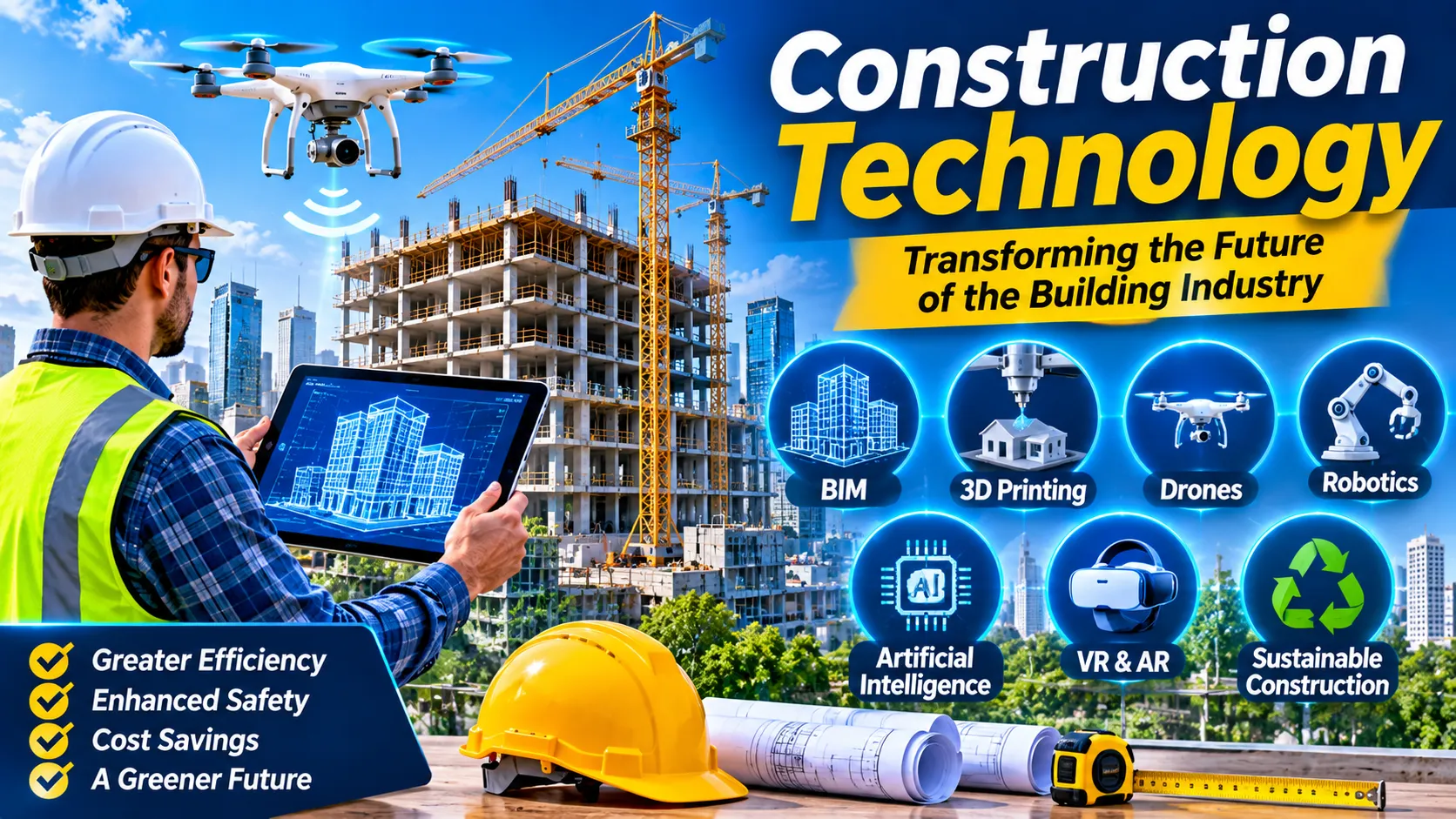
Construction Technology: Transforming the Future of the Building Industry
Introduction
I see how construction technology changes the way buildings, roads, bridges and other infrastructure projects are designed, planned and built. Traditional construction methods often need a lot of time hands‑on work and many resources. Modern technologies help construction companies finish projects faster make work safer cut costs and give quality outcomes.
I notice that from machinery and 3D printing to artificial intelligence (AI) robotics and Building Information Modeling (BIM) construction technology creates new chances for the building industry. These tools let architects, engineers, contractors and construction workers work together better and handle projects.
I think that as cities keep growing and the need, for green infrastructure rises construction technology will be a part of shaping modern communities and the future of the construction industry.
Construction technology is about the tools, equipment, software, machinery and new methods that make construction work better. Construction technology includes tools that help with project planning, building design, material management, structural development and construction‑site operations.
Modern construction technology mixes solutions with advanced equipment to make projects more precise organized and productive. For example engineers can use 3D modeling software to see a building before construction starts while drones can watch construction sites and gather project information.
The main purpose of construction technology is to boost productivity cut errors improve worker safety and make construction projects more cost‑effective.
Major Types of Construction Technology
Several technologies are changing construction. Each gives benefits and helps professionals finish projects more effectively.
1. Building Information Modeling (BIM)
Building Information Modeling, commonly called BIM is one of the important technologies in modern construction. Construction technology allows architects, engineers and contractors to build digital models of buildings and infrastructure projects.
BIM gives information about a structures design, materials, dimensions and systems in one coordinated model. This helps project teams spot problems before construction starts.
BIM also improves communication between departments reduces design conflicts and supports better project planning. By using BIM construction professionals can make decisions and avoid expensive mistakes.
2. 3D Printing in Construction
3D printing brings possibilities to the construction industry. Construction technology uses printers to build building components or even whole structures by adding materials layer by layer.
Construction 3D printers can work with made concrete and other suitable materials. They can help make walls, structural parts and architectural details with design flexibility.
One major advantage of 3D printing is its potential to cut waste and shorten some construction processes. 3D printing may also help solve housing problems by speeding up the production of chosen building parts.
3. Drones and Aerial Technology
Construction technology uses drones to take photographs, record videos, survey land and watch construction progress.
Before a project starts drones can gather information about the construction site. During development drones let project managers see work progress without having to visit every spot.
Drones can also aid safety inspections, spot site problems and create maps for planning. Drones’ speed in collecting information makes them useful, for construction projects.
4. Artificial Intelligence and Machine Learning
Artificial intelligence (AI) is helping construction professionals analyze information and make decisions. AI-powered systems can examine project schedules, budgets, equipment performance and safety data.
Machine learning can identify patterns in project information and help estimate potential risks. For example AI tools may help project managers identify scheduling delays or predict when construction equipment requires maintenance.
AI can also support design optimization and resource planning. Although human expertise remains essential these technologies can improve decision-making and project management.
5. Robotics and Automated Machinery
Robotics and automation are changing how construction tasks are performed. Modern construction sites can use systems for repetitive or physically demanding activities.
Some robots assist with bricklaying, concrete work, material handling, demolition and site inspections. Automated machinery can also perform tasks with consistent precision.
These technologies can reduce pressure on workers and improve productivity. However trained operators and proper safety procedures are still necessary to ensure that robotic equipment is used correctly.
6. Reality and Augmented Reality
Virtual Reality (VR) and Augmented Reality (AR) help construction professionals visualize projects before and during development.
VR allows users to explore a building model in an immersive environment. Architects and clients can review room layouts, interior designs and building features before construction starts.
AR adds information to real-world views, through compatible devices. Construction workers may use AR tools to compare building plans with site conditions.
These technologies improve communication, support design reviews and help identify issues earlier in the project.
Benefits of Construction Technology
Modern construction technology gives benefits that make construction projects work better.
Improved Productivity
Advanced machinery, automation and digital planning tools help construction teams finish tasks faster. By cutting manual work and improving coordination construction technology helps companies use time and resources better.
Better Construction Safety
Construction sites can involve dangers such as falling objects, heavy machinery, electrical hazards and working at heights. Wearable safety devices, drones, sensors and automated equipment can help construction technology find conditions and support safer work.
Technology does not remove every workplace risk. It can help companies watch conditions and improve safety management.
Reduced Project Costs
Digital planning, measurements and better resource management can help construction technology cut unnecessary expenses. Construction technology such as BIM can spot design conflicts before construction starts possibly stopping changes later.
Better equipment monitoring can also lower breakdowns and maintenance costs, for construction technology.
Higher Quality and Accuracy
Modern design software, laser scanning and automated equipment let construction technology professionals reach accuracy. These tools support measurements, steady processes and better quality control.
Sustainable Construction
Construction technology can back responsible building practices. Energy‑efficient design software, smart building systems and better material management help construction technology reduce energy use and material waste.
Sustainable construction methods also push the use of materials and designs that help construction technology maintain long‑term environmental performance.
The Role of Construction Technology in Smart Cities
cities depend on modern infrastructure, connected systems and efficient resource management. Construction technology helps build the buildings, transportation networks, utilities and public facilities that support these communities. I see how Construction technology makes it possible to build these structures.
For example smart buildings can use sensors and automated systems to manage lighting, heating, cooling and energy consumption. Digital construction models also help planners coordinate infrastructure projects and keep information about public assets. I have watched planners use these models to plan projects.
Advanced construction methods help make roads, bridges, water systems and transportation facilities stronger. As more people move into cities Construction technology will become more important for building sustainable communities. I believe that using these methods will keep cities running smoothly.
Challenges of Adopting Construction Technology
Although Construction technology offers benefits companies may face challenges when they introduce new tools and systems. I have seen companies struggle with this transition.
High Initial Investment: Advanced machinery, software, robotics and digital equipment can require upfront spending. Construction technology can be costly at first. That cost can worry many firms.
Training Requirements: Employees need training to operate new technologies and understand digital construction systems. Construction technology demands that workers learn skills and I have seen many training sessions that help them succeed.
Cybersecurity Risks: Connected devices and project management platforms may hold information that requires strong security measures. Construction technology must protect data. I think it is essential to secure every link.
Integration Difficulties: New systems may not always work smoothly with equipment or existing business processes. Construction technology can clash with legacy tools. I have seen projects slowed by this mismatch.
Resistance to Change: Some workers and companies may prefer methods and hesitate to adopt unfamiliar technologies. Construction technology can feel intimidating. I understand why some people resist.
Construction businesses can overcome these challenges through planning, employee training, appropriate budgeting and gradual technology adoption. I have seen firms succeed when they take steps and build confidence, in Construction technology.
Future Trends in Construction Technology
The future of construction technology will be shaped by innovation and the rising need for efficient sustainable infrastructure. I find this very encouraging.
Some important trends include: I am excited to see these coming.
AI-Powered Project Management: Intelligent systems will keep improving scheduling, cost estimation and risk assessment. I see the potential here.
Advanced Robotics: More automated equipment might help with dangerous construction tasks. I believe this will change the field.
Smart Construction Sites: Sensors and connected devices will help monitor equipment, materials and working conditions. I appreciate the safety boost.
Green Building Materials: New materials could lower impact and boost building performance. I am hopeful about this.
Digital Twins: Virtual models linked to building data will aid monitoring, maintenance and facility management. I see benefits.
Modular Construction: Factory-made building parts can improve quality control. Shorten on-site construction time. I think this speeds up projects.
These developments will keep opening doors for construction companies that invest in tools and skilled professionals. I feel hopeful, for our industry.
Why Construction Companies Should Adopt Modern Technology
Construction companies need ways to stay competitive in a changing industry. Modern technology helps businesses improve project planning talk with clients manage resources and keep quality high. I see how vital this is.
Digital tools also make it easier to track project progress organize documents and coordinate teams working in places. I appreciate how it simplifies work.
Companies that know their needs and pick suitable technologies can improve their workflows without using every new tool. A planned technology strategy can support long-term business growth and better project results. I trust that this strategy will pay off.
Frequently Asked Questions (FAQs)
1. What is construction technology?
Construction technology contains tools, machines, software and methods that help improve the planning, design and building of structures and roads.
2. What are the common types of construction technology?
Common examples of construction technology are BIM, 3D printing, drones, artificial intelligence, robots, virtual reality augmented reality and automated building machines.
3. How does technology improve construction safety?
Construction technology helps keep workers safe by using devices, sensors, drones, automated machines and digital monitoring tools that spot possible danger spots at work.
4. What is the role of AI in construction?
Artificial intelligence in construction technology can look at project data make schedules better guess costs, spot risks and plan machine maintenance.
5. Is construction technology friendly?
Many construction technology tools help the planet by cutting material waste using energy efficiently and letting companies use resources better.
Construction technology is changing the building world with planning, newer equipment, digital design and fresh construction ways. Tools, like BIM, artificial intelligence, robots, drones and 3D printing help companies grow productivity, safety, accuracy and project control.
Even though buying construction technology and learning it can cost money and time the long‑term chances are big. As construction technology grows companies will find ways to build solid buildings, green infrastructure and smarter towns.
The future of construction will rely on mixing workers with new construction technology to make safer, faster and greener places.