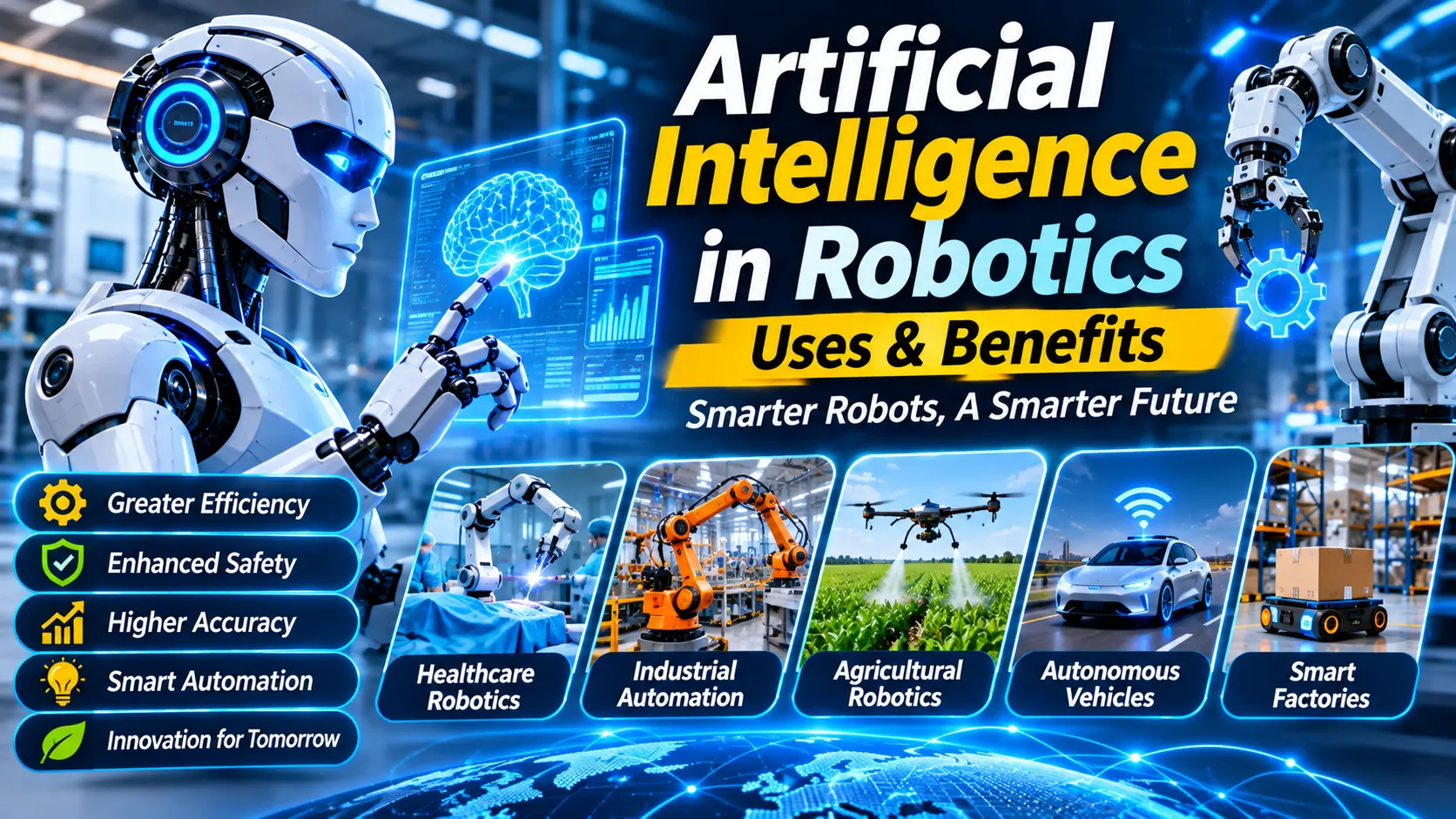
Artificial Intelligence in Robotics: Transforming the Future of Smart Machines
Introduction
Artificial Intelligence in Robotics is changing the way robots work by making them smarter and better at handling different tasks. In the past, robots followed instructions written by humans. Today, AI-powered robots can collect information, recognize objects around them, learn from what they observe, and make decisions based on their environment.
Now AI, in robotics is being used in many areas. These include factories, hospitals, farms, delivery systems and large storage places. The technology helps companies work faster do boring work make fewer mistakes and come up with new ways to solve problems.
As AI keeps getting better robots are becoming more self-sufficient. They can. Act on their own. They can also work with people adjust to situations and do tasks that once needed many people. Knowing how AI supports robotics shows why it is becoming a part of everyday life.
What Is Artificial Intelligence in Robotics?
Artificial intelligence in robotics means using computer systems that help robots understand what’s around them learn from what they’ve done before spot patterns and pick the best next step.
AI lets robots do more than just follow fixed instructions. For example a robot with AI can use cameras and sensors to see objects know where it is and decide what to do
This tech brings together areas like machine learning, computer vision, natural language processing and sensor tech. These parts work together so robots can better interact with people and their surroundings.
The main goal of AI in robotics is to help machines do tasks better solve problems and adjust when things change.
How Does AI Work in Robotics?
AI-powered robots use both hardware and software to understand the world and carry out actions. Their work usually follows a key steps.
1. Data Collection
Robots gather information using cameras, microphones, sensors and other tools. This includes pictures, sounds, how far things are, temperature and motion details.
2. Data Processing
The robot’s AI system looks at the collected data to find objects, spot patterns and figure out what’s happening around it.
3. Decision-Making
After analyzing the data the AI decides what to do. For example a robot, in a warehouse might pick the way to move a box from one spot to another.
4. Action and Movement
The robot uses motors, arms, wheels or other moving parts to carry out the chosen action.
5. Learning and Improvement
Machine learning helps some robots get better over time. They look at actions and get new training data to become more accurate and faster.
Major Technologies Used in AI Robotics
Artificial intelligence in robotics relies on technologies that work together to make machines smart.
1. Machine Learning
I find that Machine learning lets robots spot patterns and get better by using data. Than following only fixed instructions Machine learning models can spot different situations and make predictions. For example a manufacturing robot can use Machine learning to spot defects in products by looking at images. This helps businesses raise quality control and cut mistakes.
2. Computer Vision
Computer vision lets robots read data from cameras and imaging devices. It helps machines spot objects, detect obstacles recognize people and grasp their surroundings. Computer vision is commonly used in vehicles, industrial inspection systems, security robots and automated warehouses.
3. Natural Language Processing
Natural Language Processing (NLP) lets robots understand and answer language. It lets people talk to machines through spoken or written instructions. For example a service robot may answer customer questions understand commands or give directions inside a building.
4. Deep Learning
Deep learning uses neural networks to process complex information. It is especially useful for image recognition, speech processing, object detection and grasping patterns. In robotics Deep learning can help machines spot objects. React to changing conditions more accurately.
5. Sensors and Smart Systems
Sensors give robots information, about their environment. Cameras, motion sensors, distance sensors and touch sensors help robots spot obstacles, measure distances and interact with objects. When combined with AI sensor data lets robots make decisions and carry out tasks more safely.
Applications of Artificial Intelligence in Robotics
Artificial intelligence is changing the way robots work across different industries. As artificial intelligence and robotics continue to grow more and more real-world uses are being discovered. These smart robots are becoming a part of modern systems because they can learn, adapt and perform complex tasks.
1. AI in Manufacturing and Industrial Automation
Manufacturing is one of the industries to use artificial intelligence in robotics. Robots with intelligence can build things check materials move parts and do jobs that need to be done over and over again.
Artificial intelligence systems can also look at machine data to find out when something might break. This helps factories avoid stoppages and plan work better. When artificial intelligence works with robotics manufacturing becomes more accurate, faster and safer for workers.
2. AI in Healthcare and Medical Robotics
Robots with intelligence are now helping in hospitals and clinics. These robots support doctors and nurses in ways especially during medical procedures.
Artificial intelligence helps robotic systems make accurate movements during surgery. Other robots help patients recover carry supplies around hospitals or assist with tasks. Artificial intelligence allows these robots to see and understand their surroundings. They look at images and patterns. Help doctors manage patient care.. These tools are meant to support, not replace, the skills and decisions of medical professionals.
3. AI in Agriculture and Smart Farming
Artificial intelligence in farming is helping farmers grow food efficiently. Robots with intelligence can watch crops, plant seeds pick fruits and find weeds in fields.
Some robots use cameras and sensors to check the health of plants and spot weeds. These machines can move through fields on their own. They gather information. Help farmers make better decisions about water, fertilizer and crop care. With intelligence farming becomes more efficient and less dependent on manual labor.
4. AI in Transportation and Autonomous Vehicles
Artificial intelligence is crucial for self-driving cars and other autonomous transport systems. These vehicles use intelligence to understand their environment. Cameras, sensors and artificial intelligence software work together to identify roads detect traffic signs and avoid obstacles.
Artificial intelligence-powered delivery robots are also being used in places like airports and college campuses. They use navigation technology to move between points and adjust when something blocks their path. While self-driving technology is improving fast safety rules, government guidelines and human attention are still needed to make sure everything works well.
5. AI, in Warehouses and Logistics
Warehouses use robots with intelligence to move goods organize stock and complete orders. Mobile robots can travel across warehouse floors without help. They know where to go and how to avoid crashing into things.
Artificial intelligence helps these robots plan the path avoid obstacles and work well with other robots. This improves speed reduces mistakes and helps manage amounts of inventory. As a result warehouses can process orders faster and with fewer errors.
Benefits of Artificial Intelligence in Robotics
Artificial Intelligence brings benefits to modern robotics and business operations.
Efficiency: Robots with artificial intelligence can carry out repetitive tasks without mistakes. They work consistently. Help companies run their operations more smoothly and efficiently.
Greater Accuracy: AI systems can process information quickly. Support very precise movements. This makes robots ideal for tasks like inspections, measurements and delicate handling.
Reduced Human Workload: Robots can take over tasks that’re repetitive physically tough or unsafe. This allows human workers to focus on important or creative responsibilities.
Better Decision-Making: AI enables robots to analyze data in time and make smart choices. They do not rely on fixed instructions but can adapt to changing conditions.
Enhanced Workplace Safety: Robots can step in to handle jobs in factories, construction sites or chemical plants. This keeps workers out of harm’s way. Lowers the risk of accidents.
Continuous Operation: Many AI-powered robots can work for hours without needing breaks. Long as they are maintained well and have proper supervision they can keep running almost nonstop.
Challenges of Artificial Intelligence in Robotics
with all its benefits artificial intelligence in robotics comes with some challenges. These must be carefully considered by businesses and developers.
High Development and Implementation Costs: Building robots with intelligence requires expensive hardware, advanced software, testing and skilled engineers. These high costs can make it hard for small businesses to adopt the technology.
Data Security and Privacy: AI robots often collect data such, as images, videos and sound. This information must be protected. Companies need to follow cybersecurity and privacy rules to avoid data breaches or misuse.
Technical Limitations
AI robots may have difficulty adapting to environments or situations that are different from the data they were trained on. Their abilities can also be limited by the quality of sensors how well the system connects to networks and how the system is built and designed.
Workforce Training
Employees will need training to use, maintain and work safely with intelligent robots. Companies must put effort into building the skills that workers need to operate in automated settings.
Ethical and Safety Concerns
AI-powered machines should be built with safety measures and clear human supervision. Developers must also think about who’s responsible when things go wrong how personal information is protected and how automation might affect jobs.
Future Trends of Artificial Intelligence in Robotics
The future of AI robotics is likely to bring machines that’re smarter more adaptable and better connected. Several new advancements are driving progress in this area.
Humanoid Robots: Robots that look and act like humans are being made to do work in offices, labs and certain service jobs.
Collaborative Robots: Cobots are built to work with people in safe spaces helping with tasks in manufacturing and other fields.
Physical AI: This new approach links AI systems directly to real-world machines allowing robots to better understand and react to their surroundings.
Autonomous Robotics: Robots are getting better at moving through spaces and doing jobs without human guidance.
AI-Powered Healthcare Robots: Robots in medicine and recovery may offer advanced help to doctors and patients alike.
Smarter Industrial Automation: AI will keep improving how factories monitor work check quality and maintain machines.
These changes could open up chances, for businesses, scientists, engineers and others who work with smart technology.
Why AI Robotics Matters for Modern Businesses
intelligence in robotics is becoming a key tool for businesses that want to boost productivity and modernize their operations. Companies can use robots to handle repetitive tasks inspect products more accurately manage inventory and gather data on how operations run. These capabilities help businesses spot issues early cut down on delays and use their resources wisely.
Successful adoption is not just about buying new machines. Businesses must first figure out what they really need. They should look at the costs involved train their workers to use the technology and pick tools that match their everyday work. A smart and practical approach helps organizations improve efficiency. It also keeps oversight in place and ensures responsible use of technology.
Frequently Asked Questions (FAQs)
1. What is artificial intelligence in robotics?
Artificial intelligence in robotics is the use of AI to help robots learn from data recognize objects make decisions and act intelligently.
2. What are examples of AI-powered robots?
Examples include robotic arms, self-driving warehouse robots, farming robots, robots that assist in healthcare and autonomous vehicles.
3. How does AI make robots smarter?
AI lets robots process information from cameras and sensors see patterns learn from experience and choose the actions based on what they observe.
4. Which industries use AI robotics?
Industries like manufacturing, healthcare, farming, transportation, logistics, construction and research are all using AI robotics.
5. Will AI robots replace workers?
AI robots may take over some jobs. Humans are still needed for supervision making decisions fixing machines thinking creatively and solving complex problems.
Artificial intelligence in robotics is changing how machines work in the world. By combining machine learning, computer vision, sensors and automation robots can do tasks with flexibility, precision and speed.
This technology is opening doors in manufacturing, health care, farming and transportation. Even though there are challenges—like costs, data security, technical limits and the need for training—innovation is moving forward.
As AI and robotics keep improving smart machines will play a role, in modern industries and daily life. The future will depend on using this technology and pairing machine intelligence with human skill and knowledge.