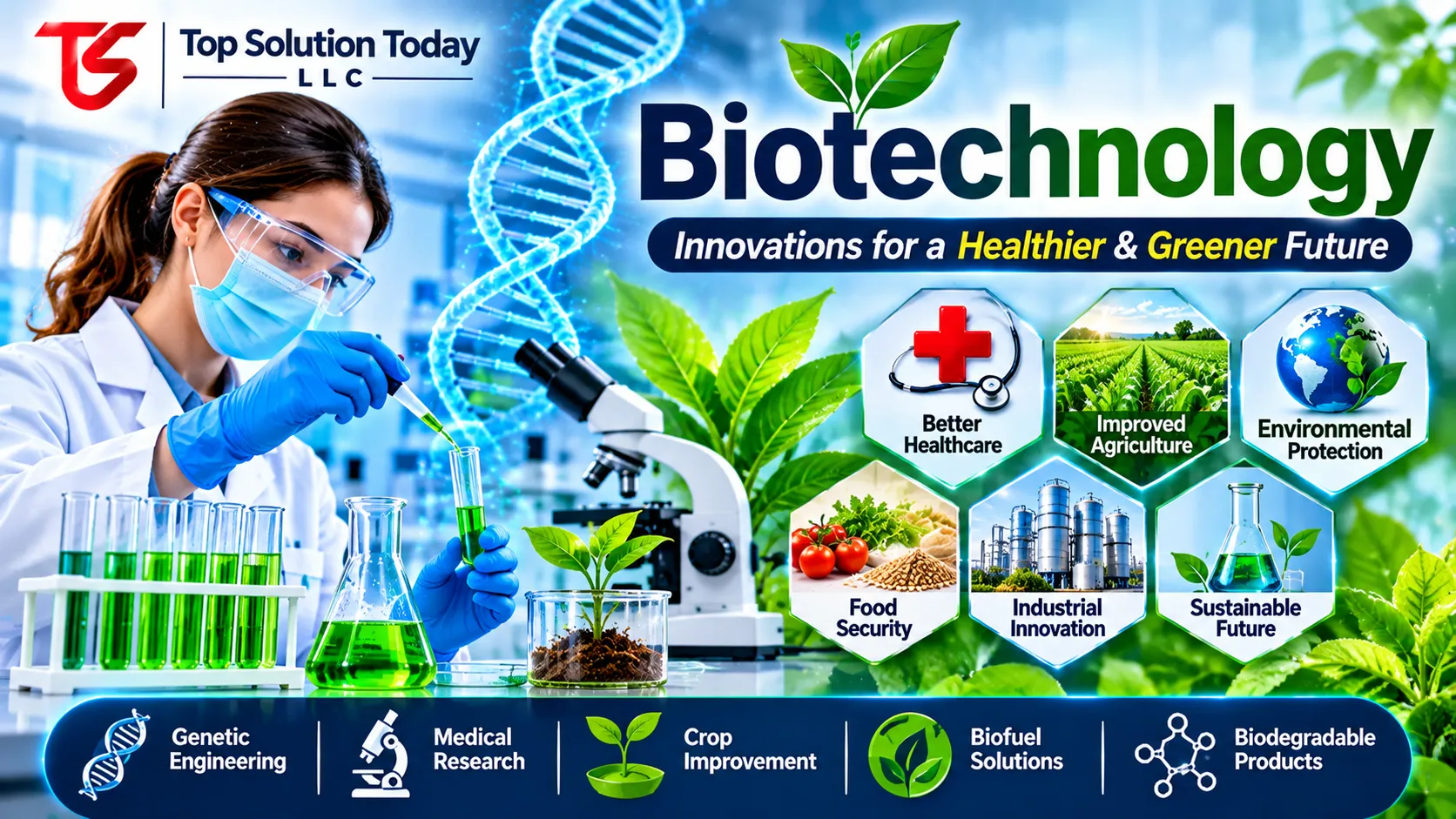
Biotechnology: Transforming the Future of Science, Healthcare, and Innovation
Introduction
Biotechnology is one of the important scientific developments shaping the modern world. It brings together biology, technology and engineering to create better solutions for healthcare, agriculture, environmental protection and industrial production. It helps make medicines that save lives improve the quality of crops and create things that’re good for the planet. Biotechnology is changing the way people live and work every day.
Biotechnology means using living things, biological systems, cells and natural processes to make products and technologies that help society. Scientists use biotechnology to learn more about how living things work to make existing products better and to find ways to solve problems in many different industries.
Nowadays biotechnology is very important in research making new medicines growing food, changing genes and taking care of the environment. As science keeps getting better biotechnology is creating chances, for new ideas and a better future.
What Is Biotechnology?
Biotechnology is the use of knowledge and modern technology to create useful products, processes and solutions. Biotechnology involves working with microorganisms, plants, animals, cells and genetic material to reach goals.
Traditional biotechnology has been used for thousands of years in activities such as bread making, cheese production and fermentation. Modern uses scientific methods, such as genetic engineering, DNA analysis, tissue culture and molecular biology.
For example Biotechnology produces insulin for people with diabetes develops vaccines improves agricultural crops and creates biological solutions for environmental pollution.
The main purpose is to use resources and scientific innovation to solve real‑world problems and improve quality of life.
Importance of Biotechnology in Modern Society
It is becoming increasingly important provides solutions to challenges in healthcare, agriculture, food production and environmental protection.
Here are some important reasons why biotechnology matters:
1. Advancing Healthcare
helps scientists develop medicines, vaccines, diagnostic tests and specialized treatments. These developments support research and improve the ability to prevent, identify and manage diseases.
2. Improving Agriculture
It supports the development of crops with characteristics, such as improved resistance to certain pests and diseases. Biotechnology can also help researchers study plant growth and agricultural productivity.
3. Supporting Environmental Protection
IT can be used in wastewater treatment, pollution management and the breakdown of environmental contaminants.
4. Improving Food Production
It supports food fermentation, food quality testing and the development of ingredients used in food manufacturing.
5. Encouraging Scientific Innovation
It creates opportunities for research and development, in genetics, medicine, agriculture, industrial manufacturing and other scientific fields.
Major Types of Biotechnology
It includes several specialized areas. Each type focuses on different applications and industries.
1. Medical Biotechnology (Red Biotechnology)
Medical biotechnology focuses on using biological systems to develop healthcare products and medical solutions.
Its applications include:
Vaccine development
Insulin production
Genetic testing
Diagnostic technologies
Biological medicines
Research into gene and cell therapies
For example, recombinant DNA technology allows scientists to produce certain therapeutic proteins, including human insulin, using genetically modified microorganisms.
2. Agricultural Biotechnology (Green Biotechnology)
Agricultural focuses on improving crops, plants, and farming practices through biological research and modern scientific methods.
It can help develop crops with selected characteristics, including resistance to particular pests, tolerance to certain environmental conditions, and improved nutritional qualities.
Plant tissue culture is another important application. It allows researchers and agricultural specialists to grow new plants from small plant tissues under controlled conditions.
3. Industrial Biotechnology (White Biotechnology)
Industrial biotechnology uses microorganisms, enzymes, and biological processes to manufacture useful products.
It is applied in industries such as food processing, textiles, chemicals, and biofuel production.
Examples include enzyme-based manufacturing, fermentation processes, and the development of certain biodegradable materials.
Industrial biotechnology can help improve production efficiency and reduce dependence on some conventional chemical processes.
4. Environmental Biotechnology (Grey Biotechnology)
Environmental biotechnology uses biological systems to address environmental challenges.
Its applications include wastewater treatment, waste management, bioremediation, and pollution control.
For example, certain microorganisms can break down specific pollutants in contaminated soil or water under suitable environmental conditions.
5. Marine Biotechnology (Blue Biotechnology)
Marine focuses on studying marine organisms and biological resources found in oceans and other aquatic environments.
Researchers investigate marine microorganisms, algae, and other organisms to explore potential applications in medicine, food production, cosmetics, and industrial development.
This field offers opportunities to discover new biological compounds and develop innovative products.
Applications of Biotechnology Across Different Industries
Biotechnology is used in industries to improve products create new solutions and help scientific progress happen.
Healthcare and Pharmaceutical Industry
Healthcare providers and pharmaceutical companies use biotechnology to make vaccines, biological medicines, diagnostic tests and treatments for diseases.
It also helps in studying diseases and developing personalized medicine for better patient care.
Agriculture Industry
Agricultural biotechnology helps scientists grow plant varieties understand crop diseases and find ways to increase farm output.
It also supports efforts in plant breeding and research for farming methods.
Food and Beverage Industry
Biotechnology plays a part in food production through fermentation and enzyme technology.
Items like yogurt, cheese, bread and some fermented drinks rely on processes, with microorganisms.
Environmental Industry
Environmental biotechnology helps with wastewater treatment breaking down waste and handling certain pollutants.
These methods can lead to production systems and better environmental protection.
Industrial Manufacturing
Manufacturers use processes and enzymes to make industrial materials, ingredients and chemicals.
These uses can support efficient and resource-friendly ways of making products.
Benefits of Biotechnology
Biotechnology offers advantages for people, companies, industries and the environment.
Medical Advancements: It helps create vaccines, medicines tests for diagnosing illnesses and new ways to treat diseases.
Improved Agricultural Productivity: Biotechnology can help grow plants with traits and support research into modern farming methods.
Environmental Protection: Natural solutions can help with cleaning water controlling pollution and reducing waste.
Food Quality and Production: Biotechnology supports making food through fermentation processing food and creating food components.
Industrial Efficiency: Enzymes and tiny organisms can make some manufacturing processes better. Use fewer resources.
Discoveries: Biotechnology helps scientists learn about genes, cells, tiny life forms and complicated living systems.
These benefits make biotechnology a key part of science and new technology.
Challenges of Biotechnology
Even though biotechnology brings chances its growth and use also come with big challenges.
Ethical Concerns
Changing genes, editing DNA and some types of research bring up questions, about right and wrong. Good science and proper rules are needed.
High Research and Development Costs
Making products and doing high-level science research can need costly tools, special labs and people who know a lot.
Considerations
Some uses need careful checks to see how they might affect nature and the variety of life.
Regulatory Requirements
It products, medicines, vaccines and genetically modified organisms may require extensive testing, regulatory review and safety evaluation.
Technical Limitations
Biological systems are complex. Can behave differently under changing conditions. Researchers must conduct testing to ensure the reliability and safety of biotechnology applications.
Addressing these challenges is important for ensuring that biotechnology develops responsibly and provides benefits.
Future Trends in Biotechnology
The future will continue to evolve as researchers introduce scientific methods and innovative biological solutions.
Artificial Intelligence in Biotechnology
Artificial intelligence can help researchers analyze data, study proteins identify patterns and support drug discovery.
Gene Editing Technology
Gene editing technologies such as CRISPR are helping scientists investigate how specific genetic changes affect systems. These tools have applications in medical research and agriculture.
Personalized Medicine
Advances in genetics and molecular biology are supporting personalized healthcare approaches. Researchers can study biological characteristics to better understand disease risks and potential treatment options.
Synthetic Biology
Synthetic biology focuses on designing or modifying systems for useful purposes. It may support the development of medicines, materials and sustainable manufacturing processes.
Sustainable Biofuels
Biotechnology research is exploring methods, for producing renewable fuels from suitable organic materials and biological resources.
Advanced Diagnostic Technology
New molecular testing methods are making it easier to detect and study diseases using biological samples. These methods allow for more accurate results helping doctors and researchers understand illnesses better.
These advances are opening up possibilities in healthcare, agriculture, manufacturing and environmental science. In healthcare they help identify diseases early. In agriculture they improve crop health. Reduce losses. In manufacturing they support more efficient processes. In science they help monitor pollution and protect ecosystems.
Conclusion
Biotechnology is changing science by combining biological knowledge with advanced technology to tackle important problems. This includes research, agricultural development, industrial production and environmental protection. The applications are creating benefits across many fields.
There are challenges to consider. Research can be expensive. Ethical concerns must be addressed. Environmental safety is important. Regulations need to be clear and fair. These issues require thinking and responsible action.
Still scientific progress continues to push the boundaries of what biotechnology can do. As research moves forward will remain a part of healthcare progress sustainable production, scientific discovery and technological growth. Its future holds promise, for human health and a more sustainable world.
Frequently Asked Questions (FAQs)
1. What is biotechnology?
It is the use of living organisms, cells, biological systems and scientific processes to develop products and solutions.
2. What are the main types of biotechnology?
The main types include biotechnology, agricultural biotechnology, industrial biotechnology, environmental biotechnology and marine biotechnology.
3. How is biotechnology used in healthcare?
It is used to develop vaccines, medicines, diagnostic tests, biological treatments and technologies for research.
4. What are the benefits of biotechnology?
Tt supports advancements, agricultural improvement, food production, environmental protection and industrial efficiency.
5. What is the future of biotechnology?
The future includes AI-assisted research, gene editing, personalized medicine, synthetic biology, advanced diagnostics and sustainable biofuel development.