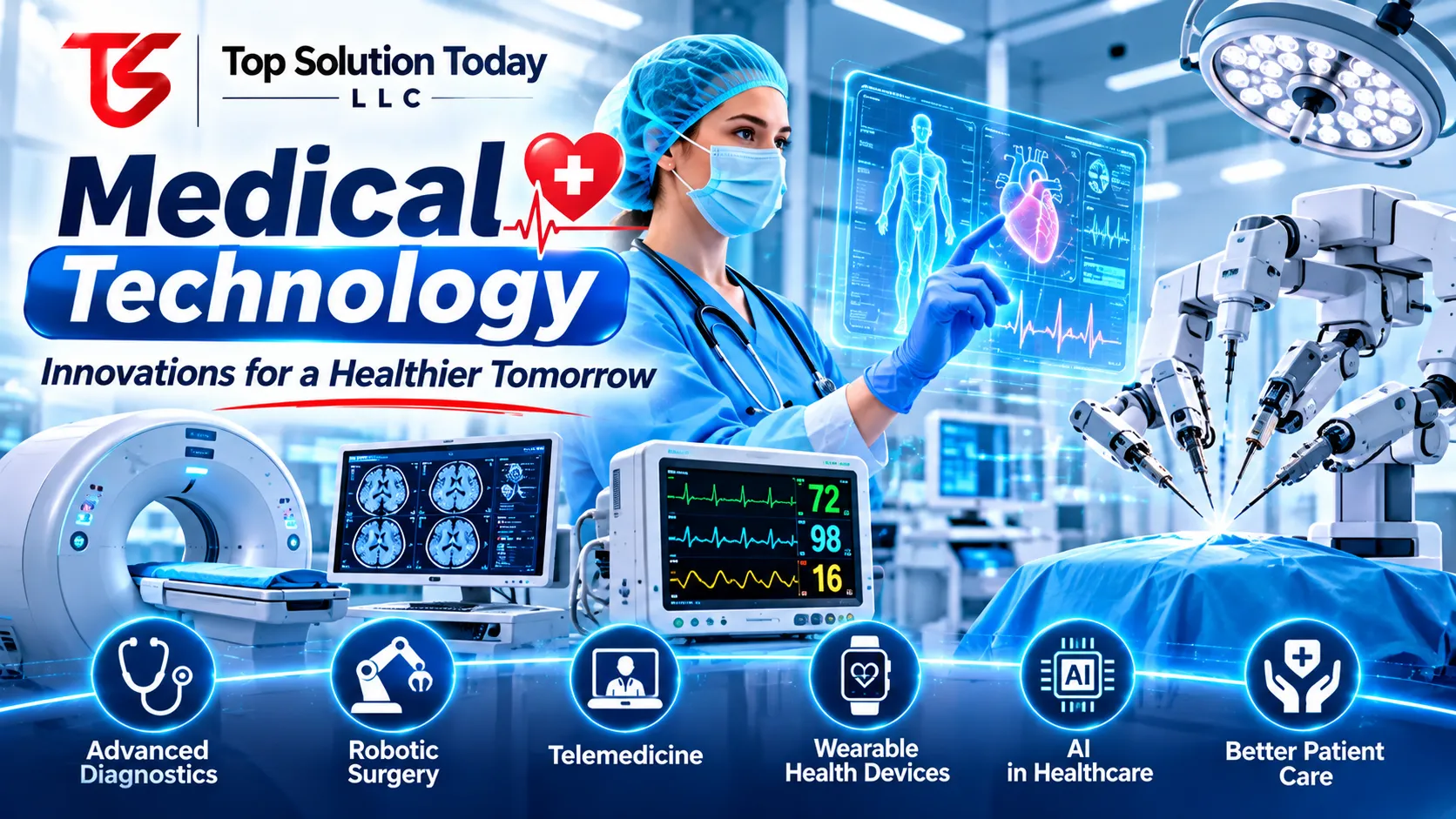
Medical Technology: Transforming the Future of Modern Healthcare
Introduction
Healthcare has changed a lot over the years because of progress in science, engineering and new digital tools. Modern hospitals and doctors now use equipment, digital systems and smart technologies to find diseases improve treatments and give better patient care. These changes have made healthcare faster easier to reach and more trustworthy.
Medical Technology means using equipment, digital tools, software and new systems to stop, find, watch and treat health problems. From high‑end imaging machines and robot surgery, to intelligence and wearable health gadgets Medical Technology is changing how healthcare is delivered.
Today, hospitals, clinics, labs and health organizations rely on technologies to make medical services better and help patients do well. Knowing technology its kinds, uses, benefits and future changes shows why it is more important now.
What Is Medical Technology?
Medical technology is the use of science, engineering and new digital tools to make healthcare better. Medical technology contains devices, machines, software and systems that help doctors find problems watch patients and carry out treatments.
Traditional healthcare used a lot of hand examinations and simple tools. Modern medical technology brings diagnostic systems, computerized patient records, remote monitoring gadgets and automatic lab machines.
For example MRI machines let doctors look inside the body while digital health apps let patients get some health services from away.
The main goal of technology is to help doctors make diagnoses more accurate, speed up treatments and make health services easier to get.
Importance of Medical Technology in Modern Healthcare
Medical technology helps make healthcare better and faster. As more people live and need care hospitals need tools to keep patient records find sicknesses and give good treatment. I see how medical technology can make a difference.
Here are some important reasons why medical technology matters:
1. Early Disease Detection
Modern medical technology lets doctors spot health problems early. Cameras that take pictures inside the body lab machines that test samples and digital tools that screen for sickness give facts for doctors. Finding sickness early lets doctors decide quickly about tests and how to treat. I have seen how early detection saves lives.
2. Improved Treatment Methods
Better medical technology lets doctors do procedures accurately. New surgical tools, robots that help and special treatment machines help kinds of operations. I notice how these tools help patients recover faster.
3. Better Patient Monitoring
Wearable gadgets and remote systems gather data like heart beat, blood pressure and oxygen in the blood. Doctors use this data to help patients. I have seen patients feel safer when doctors monitor their numbers.
4. Efficient Healthcare Management
Computer systems help hospitals schedule visits keep files handle lab reports and coordinate care. I see how smooth management saves time for everyone. Medical technology keeps the process running smoothly.
5. Increased Access to Healthcare
Telemedicine and online health sites let patients talk to doctors without going to a clinic. I think these tools give people easier access, to care.
Major Types of Medical Technology
technology includes several categories of equipment and digital systems. Medical technology supports healthcare activities.
1. Medical Imaging Technology
Medical imaging technology helps doctors examine body structures without relying only on physical examinations.
Common medical imaging technologies include:
X-ray machines
Magnetic Resonance Imaging (MRI)
Computed Tomography (CT) scans
Ultrasound systems
Digital mammography
Medical imaging technology helps healthcare professionals investigate injuries examine organs and identify medical conditions.
2. Robotic Surgery Technology
Robotic surgery technology provides instruments and computer-assisted controls that surgeons can use during certain surgical procedures.
Robotic surgery technology may offer visualization, precise instrument movement and improved control during selected operations.
However Robotic surgery technology does not independently replace surgeons. Qualified medical professionals remain responsible for planning and performing procedures.
3. Artificial Intelligence in Healthcare
Artificial Intelligence in Healthcare is becoming a part of modern medical technology. Artificial Intelligence in Healthcare powered systems can analyze amounts of medical information and help healthcare professionals identify patterns.
Some applications include:
Medical image analysis
Clinical decision support
Healthcare data management
Patient scheduling
Medical research assistance
Disease risk assessment
Artificial Intelligence in Healthcare can support professionals but Artificial Intelligence in Healthcares results require appropriate clinical evaluation and human oversight.
4. Wearable Health Technology
Wearable health devices allow individuals to monitor selected health measurements through sensors.
Examples include smartwatches, fitness trackers and specialized medical monitoring devices.
Depending on the device Wearable Health Technology may track heart rate, activity, sleep patterns or other measurements. Some approved devices also support remote monitoring for specific health conditions.
5. Telemedicine Technology
Telemedicine uses digital communication systems to connect patients with healthcare professionals remotely.
Through video consultations, online appointments and secure messaging platforms patients can discuss healthcare concerns without traveling to a clinic.
Telemedicine can improve access, to healthcare for people living in remote areas.
6. Laboratory and Diagnostic Technology
Modern laboratory equipment helps healthcare professionals analyze blood samples, urine samples, tissue specimens and other medical materials.
Laboratory and Diagnostic Technology can improve laboratory efficiency, support procedures and help deliver important diagnostic information.
Applications of Medical Technology Across Healthcare
Medical technology is used in different healthcare environments to improve patient services and medical operations.
Hospitals and Clinics
Hospitals use medical imaging systems, patient monitoring equipment, electronic health records, and advanced surgical tools.
These technologies help healthcare teams coordinate patient care and manage medical activities more efficiently.
Medical Research
Researchers use advanced laboratory equipment, computer modeling, genetic analysis tools, and data-processing systems to study diseases and investigate potential treatments.
Technology also supports the development and evaluation of new medical products.
Emergency Healthcare
Emergency departments use monitoring equipment, digital communication systems, and advanced diagnostic tools to assess patients and coordinate urgent care.
Portable medical devices can also support healthcare professionals when treating patients outside traditional hospital settings.
Pharmaceutical Industry
Pharmaceutical companies use automated manufacturing equipment, laboratory systems, and quality-control technologies to develop and produce medicines.
These technologies support product testing, manufacturing consistency, and regulatory compliance.
Home Healthcare
Digital health applications, remote monitoring devices, and certain portable medical equipment allow patients to receive some healthcare support at home.
This can help healthcare professionals monitor selected patient measurements without requiring every check to take place in a hospital.
Benefits of Medical Technology
Medical technology brings advantages for patients healthcare professionals and medical institutions.
Improved Diagnostic Support: imaging and laboratory systems give doctors important information to identify medical conditions more accurately.
Better Patient Monitoring: Digital devices allow collection of health data helping professionals keep track of a patient’s condition over time.
Greater Efficiency: Automated systems and digital records help reduce time spent on tasks like paperwork and data entry.
Remote Healthcare Access: Telemedicine enables patients, in underserved areas to receive medical care without traveling.
Advanced Surgical Procedures: Specialized tools help surgeons perform operations with precision and better visualization.
Medical Research Development: Modern tools and data analysis methods help scientists study diseases and create treatments and solutions.
All these benefits show how medical technology strengthens healthcare and helps professionals make better informed decisions.
Challenges of Medical Technology
Even though medical technology offers benefits healthcare organizations must also deal with several challenges.
High Equipment Costs: Advanced medical machines, robotic surgery systems and diagnostic tools often come with price tags.
Smaller hospitals and clinics may struggle to afford and maintain these technologies. This can make it harder for them to offer the level of care as larger facilities.
Data Privacy and Security
Digital healthcare systems hold sensitive patient information. Hospitals must use cybersecurity tools to keep medical records safe and stop any unauthorized access.
Technical Training
Medical professionals need training to use advanced equipment and to understand digital healthcare systems.
If training is not enough technology may fail to give the benefits that were planned.
System Reliability
Technical failures, software mistakes and equipment maintenance issues can stop healthcare operations.
Regular maintenance and dependable technical support are key for effective use.
Digital Accessibility
Not all patients can use internet, smartphones or digital healthcare services. Healthcare providers must keep these limits in mind when they bring solutions.
Future Trends in Medical Technology
The future of technology will keep growing as researchers and healthcare organizations bring new digital and scientific innovations.
Artificial Intelligence and Machine Learning
Artificial Intelligence and Machine Learning can help with image analysis, healthcare research, clinical decision support and administrative automation.
Personalized Medicine
Advances in testing and medical data analysis are backing more personalized approaches, to healthcare. These methods can help doctors look at each patient’s traits when choosing treatment options.
Advanced Robotic Systems
Robotic medical systems are expected to keep getting better because of progress in imaging, tools that are made for use and computer help with medical tasks.
Remote Patient Monitoring
Connected medical devices might offer chances for doctors and nurses to watch certain health signs from a distance.
3D Printing in Healthcare
3D printing is used to make medical models, legs or arms that replace missing body parts, things for the mouth and some medical tools. More new ideas could lead to uses for this kind of technology.
Digital Health Records
New electronic health record systems are getting better at how hospitals and clinics keep, arrange and share information in a safe way.
These changes could make healthcare more linked together faster and better for each person while still making sure that doctors and nurses make the decisions.
Medical technology is changing the way healthcare works by using tools, digital systems, smart machines and new ways to treat people. From pictures of the inside of the body and robot doctors to devices you wear and seeing a doctor from away these changes are helping medical workers do a better job and give better care to patients.
Even though problems like costs, safety of information training for staff and making sure everyone can use the technology are still important more new ideas are making new chances, for medical progress.
As technology keeps getting better hospitals and clinics will need to use digital tools and better medical machines. Medical technology will always be a part of how healthcare works, how science studies health and how patients get better in the future.
Frequently Asked Questions (FAQs)
1. What is medical technology?
Medical technology means the tools, devices, software and digital systems that help doctors and nurses diagnose keep track of prevent and treat health problems.
2. What are the main types of technology?
The main types are medical imaging tools, robotic surgery systems, artificial intelligence, wearable health devices, telemedicine and lab testing equipment.
3. How does medical technology help patients?
It helps patients by finding diseases tracking health changes over time allowing for better treatments and giving access to care from a distance.
4. What are the benefits of technology?
The benefits include diagnosis, more accurate health monitoring, smoother healthcare operations and new discoveries in medical research.
5. What is the future of technology?
The future of technology includes AI-driven healthcare, personalized treatments, smarter robots, remote health tracking, 3D printing, for medical parts and better digital health records.