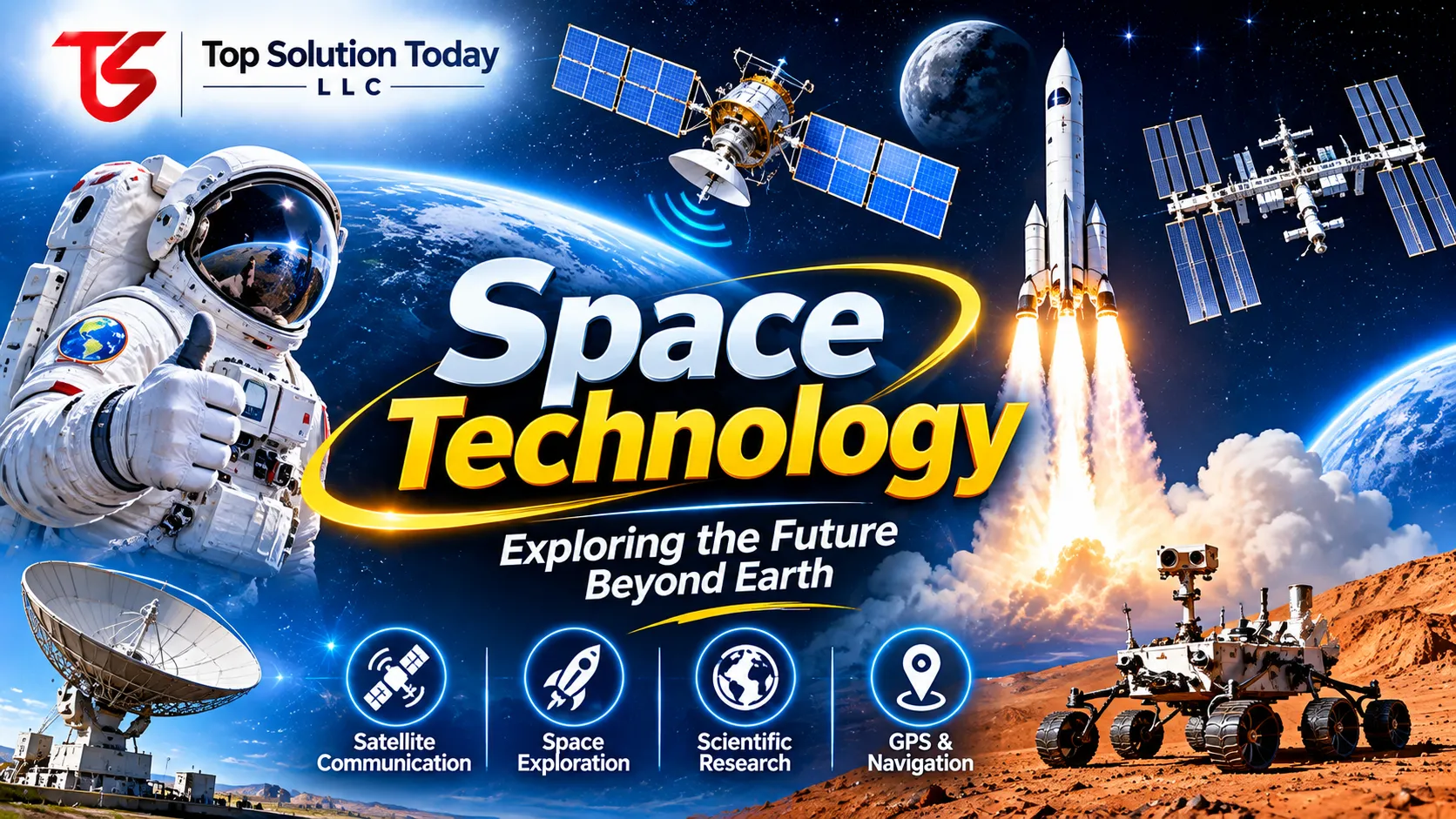
Space Technology: Exploring the Future of Space Exploration and Innovation
Introduction
Space technology is now one of the exciting and important parts of modern science. Over the years humans have made progress in exploring space studying far planets, launching satellites and building advanced spacecraft. Space technology achievements have made us understand the universe better and have brought tools that help life on Earth.
Space technology means the tools, machines, equipment, software and science systems that are made to explore space and to do work beyond Earths air. Space technology includes satellites, rockets, space stations, robotic spacecraft, communication systems and advanced navigation tools.
Today space technology plays a role, in communication, weather prediction, science research, navigation and global safety. Governments, research groups and private firms keep putting money into space innovation to find chances and grow human knowledge.
What Is Space Technology?
Space technology is the use of knowledge, engineering and advanced tools to explore and work in outer space. It helps scientists look at stars gather details about planets and learn about conditions that’re far from Earth.
Space technology has parts that work together to make space trips possible. Rockets send spacecraft into space, satellites. Send information and space probes visit faraway planets and other objects in space.
For example communication satellites help send TV signals and internet data while weather satellites watch the sky and help predict the weather.
The main goal of space technology is to increase science knowledge help with communication explore the stars and create ideas that help people.
Importance of Space Technology in Modern Society
Space technology is important because it gives services and information that help parts of life today. Its uses go beyond just exploring space and help with communication, traveling, farming and watching the environment.
Here are some reasons why space technology is important:
1. Global Communication
Communication satellites help people in countries and places stay in touch. They help with TV shows, satellite internet, phone calls and emergency communication systems.
2. Weather Forecasting
Weather satellites get data about clouds, storms, heat patterns and the air. This data helps weather experts make predictions and watch weather.
3. Navigation and GPS
Satellite navigation systems give location and direction help. They help with driving, flying, boating and apps that need location info.
4. Environmental Monitoring
Earth-observation satellites help scientists watch forests, oceans, ice, air quality and changes in the environment. This data helps with climate studies and managing resources.
5. Scientific Discoveries
Space missions let scientists look at planets, stars, galaxies and other space objects. These discoveries help us learn more, about the universe and the conditions that can support life.
Major Types of Space Technology
Space technology includes systems that are created to do specific jobs when it comes to space exploration and using satellites.
1. Satellite Technology
Satellites are man-made objects that are put into orbit around Earth or other planets. They are used for talking to each other finding your way watching the weather doing science work and looking at Earth from above.
Major types are:
Communication satellites
Weather satellites
Navigation satellites
Earth-observation satellites
Scientific research satellites
Satellites are very important for how people talk to each other these days and they give information to scientists and companies.
2. Rocket Technology
Rocket technology makes it possible to go into space by taking spaceships, satellites and tools to places beyond Earths air.
Rockets make power by pushing out moving gases, which helps them beat Earths pull and get into space.
Modern rockets use engines, good ways to find their way and control systems to put things into the right places in space.
Reusable rocket technology is also making some trips into space because parts of the rockets can be brought back and used again.
3. Spacecraft Technology
Spacecraft are vehicles that are made to move through space and do jobs. They can have people inside tools for science ways to talk or machines that work on their own.
Examples are ships that have people, ships that carry things small ships that come back to Earth and machines that explore planets.
Spacecraft have ways to find their way tools to talk, protection from heat and energy sources to work in space conditions.
4. Space Station Technology
Space stations are buildings made by people that are meant to help astronauts and do science work while they are floating in space.
The International Space Station (ISS) is an example of countries working together on space science. It acts like a lab where scientists look at life, physics, materials and how space affects peoples bodies.
5. Robotic Space Exploration
Robotic spaceships and machines that walk on planets let scientists check out places that’re hard or not safe for people to go.
These machines can pick up dirt take pictures look at the surface of planets and send science data back to Earth.
Robotic exploration has helped us learn a lot, about Mars, the Moon and other parts of the system.
Applications of Space Technology Across Different Industries
I see that Space technology is used in industries and gives useful services to individuals, businesses and governments.
Communication Industry
I notice that satellite communication systems help with television broadcasting, telephone services, internet connectivity and communication in areas.
Space technology is particularly useful in locations where traditional communication infrastructure’s limited.
Agriculture Industry
I see that farmers and agricultural organizations use satellite images and remote sensing technology to monitor crops evaluate soil conditions and identify changes in vegetation.
I think these technologies support precision agriculture and help improve resource management.
Transportation Industry
I notice that satellite navigation systems support road transportation, aviation and maritime operations. GPS-based services help users determine locations, plan routes and monitor vehicle movements.
Climate Research
I see that space-based observation systems collect information about weather patterns, ocean temperatures and environmental changes.
I observe scientists use this data to study climate conditions and improve weather prediction models.
Defense and Security
I notice that space technology supports satellite communication, navigation, surveillance and Earth observation. These systems help authorized organizations monitor geographic areas and maintain communication networks.
Benefits of Space Technology
I see that space technology provides advantages that contribute to scientific progress and modern development.
Communication: satellites connect distant regions and support global communication services.
Accurate Navigation: satellite positioning systems help people and businesses determine locations and plan routes.
Improved Weather Forecasting: space-based monitoring provides information about storms and atmospheric conditions.
Scientific Advancement: space missions help researchers understand planets, stars, galaxies and the wider universe.
Environmental Protection: satellite observations help monitor deforestation, natural disasters, ocean conditions and climate changes.
Economic Opportunities: space research and satellite services create opportunities for innovation, engineering, manufacturing and technology development.
I see these benefits demonstrate how space technology supports both exploration and everyday activities, on Earth.
Challenges of Space Technology
Although space technology offers opportunities, developing and operating space technology systems has many challenges.
High Development Costs
Designing spacecraft, building rockets and conducting space missions require an amount of money. Advanced equipment and specialized research also raise the cost of development.
Space Debris
Old satellites, discarded rocket components and other objects can remain in Earths orbit. Space debris creates collision risks for satellites and spacecraft.
Technical Limitations
Spacecraft must operate in temperatures, high radiation and vacuum. Equipment must be carefully. Tested to survive these harsh environments.
Communication Delays
Communication with spacecraft can experience significant delays because signals need time to travel across enormous distances.
Human Safety
Astronauts face risks associated with radiation exposure, microgravity, isolation and long‑duration space missions. Advanced life‑support systems and careful mission planning are essential.
Addressing these challenges is important for making future space exploration safer more reliable and more sustainable.
Future Trends in Space Technology
The future of space technology will continue to develop as scientists and engineers introduce systems and explore new possibilities.
Artificial Intelligence in Space Exploration
Artificial intelligence can help spacecraft analyze information recognize objects, process data and support autonomous operations.
Mars Exploration
Future missions may focus on studying the environment collecting scientific samples and developing technologies that could support longer human exploration missions.
Reusable Rocket Systems
Reusable launch vehicles are helping space companies explore ways to reduce launch costs and improve access to space.
Advanced Satellite Networks
Next‑generation satellite networks are expected to expand internet connectivity improve communication services and provide global coverage.
Lunar Exploration
Future lunar missions aim to study the Moons surface investigate resources and develop technologies that may support long‑term exploration.
Space Tourism
Commercial space tourism is an emerging industry that aims to provide individuals with opportunities to experience space travel. However it remains expensive. Requires extensive safety measures.
These developments may create scientific discoveries and opportunities, for future generations.
Space technology is changing how humans explore the universe and learn about our planet. With tools like satellites, rockets, robotic spacecraft and space stations new advancements are making research faster and more effective.
The uses of space technology go beyond space missions. It plays a role in communication, navigation, farming, weather prediction and keeping an eye on the environment. These real-world applications show how important space technology is to daily life.
Even though there are challenges like costs, space junk, technical limits and keeping astronauts safe ongoing research is helping to solve these problems and open up new possibilities.
As technology keeps improving space exploration will keep growing. It will help us learn more about the universe and support science in ways. Space technology is a part of understanding the cosmos and building a world that is more connected and advanced.
Frequently Asked Questions (FAQs)
1. What is space technology?
Space technology refers to the tools, equipment, software and systems made for space exploration, satellite use and scientific study outside Earth’s atmosphere.
2. What are the main types of space technology?
The main types are satellite technology, rocket technology, spacecraft, space stations and robotic systems used for space missions.
3. How does space technology help life?
It helps with GPS navigation, weather forecasting, satellite communication, TV broadcasts, internet access and monitoring changes in the environment.
4. What are the benefits of space technology?
The benefits include communication, accurate navigation, new scientific discoveries, improved weather forecasts and deeper understanding of the environment.
5. What is the future of space technology?
The future holds intelligence, reusable rockets, missions to Mars stronger satellite networks, trips to the Moon and space travel, for tourists.