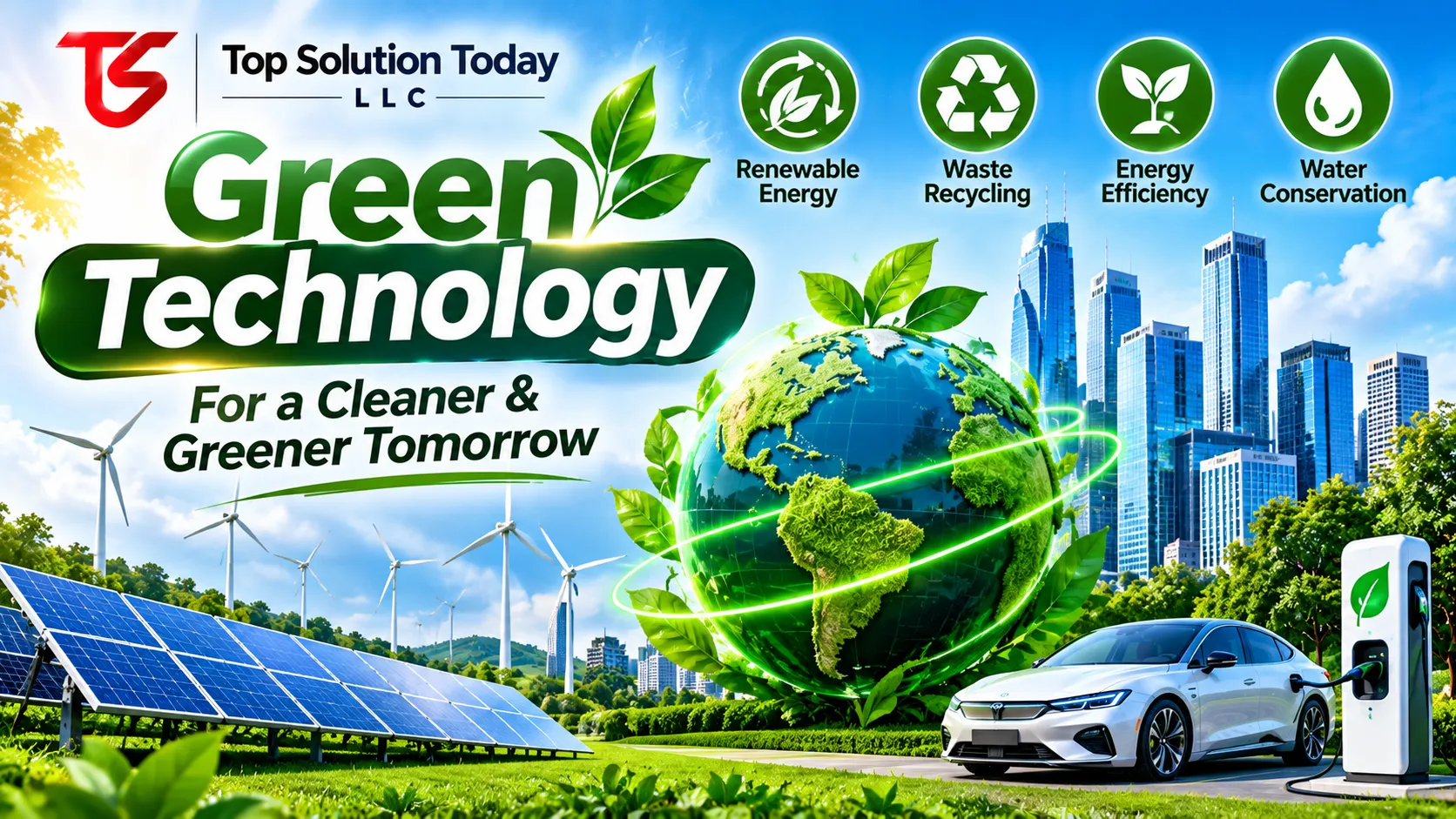
Green Technology: Transforming the Future Through Sustainable Innovation
Introduction
I think environmental protection has become one of the important priorities in today’s world. Climate change, pollution, deforestation and the increasing use of resources have created serious environmental challenges. As populations grow and industries expand, finding ways to protect the planet has become essential. This is where green Technology plays a role.
green Technology, also known as technology or clean technology focuses on developing innovative solutions that reduce environmental damage conserve natural resources and support a healthier planet. From energy and electric vehicles to smart buildings and waste management systems green Technology is changing how people live, work and use energy.
I see businesses, governments and individuals adopting friendly technologies to reduce their carbon footprints and create more sustainable communities. Understanding green Technology, its types, benefits and future developments helps explain its importance, in society.
What Is Green Technology?
green technology means using science, new tools and green methods to cut the effects of human work on the planet. I believe green technology can change the world.
green technologys main purpose is to make products and systems that use resources well cut pollution save power and keep the environment healthy for a time.
For example solar panels turn sunlight into power, electric cars cut fumes and water recycling saves fresh water.
Green technology works in fields like energy, transport, farming, building and making goods. green technology encourages people and companies to use options while still meeting money and people needs.
Importance of Green Technology in Modern Society
Green technology is getting more important because environment problems hurt communities, businesses and nature everywhere.
Old energy sources, factory work and much use of resources cause pollution and climate gases. Green tools give ways to solve these problems.
Here are some important reasons why green technology matters:
1. Reducing Environmental Pollution
Green power systems, electric transport and new waste methods can cut kinds of pollution. They make air, water and places cleaner. I think green technology is key.
2. Conserving Natural Resources
Green technology encourages using water, power, basic materials and other natural resources.. Gear that saves energy cut waste.
3. Supporting Climate Change Solutions
Energy from nature and tech that makes little carbon can cut climate gases. They help limit the effects of climate change.
4. Improving Energy Efficiency
New power systems use gear and smart checks to cut energy waste. This helps homes, businesses and factories use electricity better.
5. Promoting Development
Green technology helps money growth while caring for nature. Green technology creates chances for ideas, new businesses and nature-friendly companies. I feel hopeful, about technology.
Major Types of Green Technology
Green technology includes innovations designed to protect natural resources and improve environmental performance.
1. Solar Energy Technology
Solar energy technology uses sunlight to generate electricity or heat. Solar panels contain photovoltaic cells that convert sunlight into energy.
Solar power is commonly used in homes, commercial buildings, industries and large solar farms.
Some major applications include:
Residential solar panel systems
Solar-powered streetlights
Solar water heaters
Commercial solar installations
Solar energy storage systems
Solar technology provides an energy source and can reduce dependence on fossil fuels.
2. Wind Energy Technology
Wind energy technology uses wind turbines to convert the movement of air into electricity.
Wind farms can be installed on land or offshore depending on conditions and energy requirements.
Modern wind turbines are designed to generate electricity and contribute to cleaner energy production.
3. Electric Vehicle Technology
Electric vehicles (EVs) use batteries and electric motors instead of conventional gasoline or diesel engines.
They produce no tailpipe emissions during operation. Can help reduce local air pollution particularly when charged using renewable electricity.
Modern electric vehicle technology includes batteries, regenerative braking, smart charging systems and energy management software.
4. Waste Management and Recycling Technology
Waste management technology focuses on reducing, collecting, sorting and processing waste materials.
Modern recycling systems use automated equipment and intelligent sorting technologies to separate materials such as plastic, paper, glass and metal.
These solutions help reduce landfill waste and allow valuable materials to be reused in manufacturing.
5. Water Conservation Technology
Water conservation technology helps people and organizations use freshwater efficiently.
Examples include irrigation systems, rainwater harvesting, water purification equipment and wastewater recycling systems.
These technologies are especially useful, in areas where freshwater resourcesre limited.
6. Green Building Technology
Green building technology focuses on designing and constructing buildings that use energy and water while reducing environmental impact.
It includes energy- lighting, improved insulation, smart temperature controls, sustainable building materials and renewable energy systems.
Green buildings can create comfortable indoor environments while reducing long-term operating expenses.
Applications of Green Technology Across Different Industries
Green technology is used in sectors. Green technology improves performance. Green technology supports development.
Energy Industry
Energy companies use panels, wind turbines, hydropower systems and energy storage solutions to generate and manage cleaner electricity. Green technology helps diversify energy sources. Green technology reduces reliance on fossil fuels.
Transportation Industry
The transportation sector uses vehicles, hybrid systems charging infrastructure and energy-efficient public transportation. Green technology can help reduce fuel consumption. Green technology improves air quality.
Agriculture Industry
Modern agriculture uses precision farming, smart irrigation, soil monitoring and renewable energy systems. Green technology helps farmers manage water, fertilizers and other resources efficiently.
Manufacturing Industry
Manufacturing companies adopt energy- machinery, recycling systems, waste reduction processes and cleaner production methods. Green technology reduces resource consumption. Green technology improves efficiency.
Construction Industry
The construction industry uses materials, energy-efficient designs, green insulation and smart building management systems. Green technology reduces the impact of buildings throughout their life cycles.
Benefits of Green Technology
Green technology offers advantages, for individuals, businesses and the environment.
Reduced Carbon Emissions: Renewable energy and cleaner transportation can help reduce greenhouse gas emissions.
Energy Savings: Energy- equipment and smart systems help reduce unnecessary electricity consumption.
Natural Resource Conservation: Recycling and water management technologies help people use resources in a way.
Improved Public Health: Lowering air and water pollution can help people stay healthier in their communities.
Business Opportunities: Sustainable products and services give businesses a chance to come up with ideas and reach new customers.
Long-Term Cost Savings: Some green technologies cost a lot to start with. Save money on energy, water and other expenses in the long run.
These advantages show that green technology plays a role in making the future more sustainable.
Challenges of Green Technology
Even though green technology has good effects on the environment using it can come with some problems.
High Initial Investment
Solar power systems, electric cars, energy storage systems and eco-friendly building materials can cost a lot at first.
Limited Infrastructure
Some areas don’t have electric car charging stations, connections to renewable energy or up-to-date recycling centers.
Technical Limitations
Sources of energy, like solar and wind power rely on the weather. Energy storage systems and strong electricity networks are needed to keep power steady.
Awareness
Many people and companies don’t know about the sustainable technologies that are available or the long-term benefits they offer. Teaching people and raising awareness can lead to use of these technologies.
Recycling and Material Management
Solar panels, batteries and electronic devices need recycling and disposal systems to avoid harming the environment.
Solving these problems can make sustainable technology easier to use and more practical.
Future Trends in Green Technology
The future of technology will keep growing as scientists, engineers and companies continue to bring new solutions to protect the environment.
Artificial Intelligence for Energy Management
Artificial intelligence helps understand how energy is used. It can predict when energy demand will be high and make smart energy systems work better. This leads to waste and more efficiency.
Advanced Battery Technology
New battery technology is being created to hold energy charge faster last longer and use fewer rare materials. These improvements make energy storage more reliable and less harmful, to the planet.
Smart Cities
Smart cities use devices and systems to control electricity, water, traffic, buildings and waste. These systems work together to use resources wisely and keep life more sustainable.
Sustainable Agriculture
Precision farming uses sensors and data to help farmers grow crops efficiently. Automated irrigation and smart monitoring systems can cut water use. Save resources while boosting crop yields.
Carbon Capture Technology
Carbon capture technology is being built to collect carbon dioxide from factories and even from the air. The captured carbon can be stored underground. Used in other processes helping to lower greenhouse gas levels.
Circular Economy Solutions
Circular economy practices focus on fixing items using materials again and recycling what can’t be reused. This keeps materials in use. Reduces the need to take new resources from nature.
These advancements may open up ways to protect the environment and support long-term economic growth in a sustainable way.
Green technology is changing how people and businesses look at protecting the planet and managing resources.
From panels and wind turbines to electric cars, recycling systems and green buildings new ideas are helping make cleaner more efficient solutions.
Even though big problems like costs, limited infrastructure and technical limits still exist ongoing research and new ideas are making green technology more valuable.
As people become more aware of the environment using technology will become even more important for individuals, businesses and governments. Green technology is not about protecting the planet; it is also about building a healthier more efficient and sustainable future for the next generations.
Frequently Asked Questions (FAQs)
1. What is technology?
Green technology means tools, systems and processes that’re friendly to the environment designed to cut pollution save natural resources and support sustainability.
2. What are the main types of technology?
Major types are power, wind power, electric cars, recycling technology, water saving systems and green building solutions.
3. How does green technology help the environment?
Green technology helps cut pollution save resources improve energy efficiency and lower greenhouse gas emissions.
4. Why is green technology important, for businesses?
Green technology can help businesses cut resource use improve efficiency reach sustainability goals and find market opportunities.
5. What is the future of technology?
The future will have batteries, smart cities, AI‑controlled energy management, carbon capture, sustainable farming and circular economy solutions.