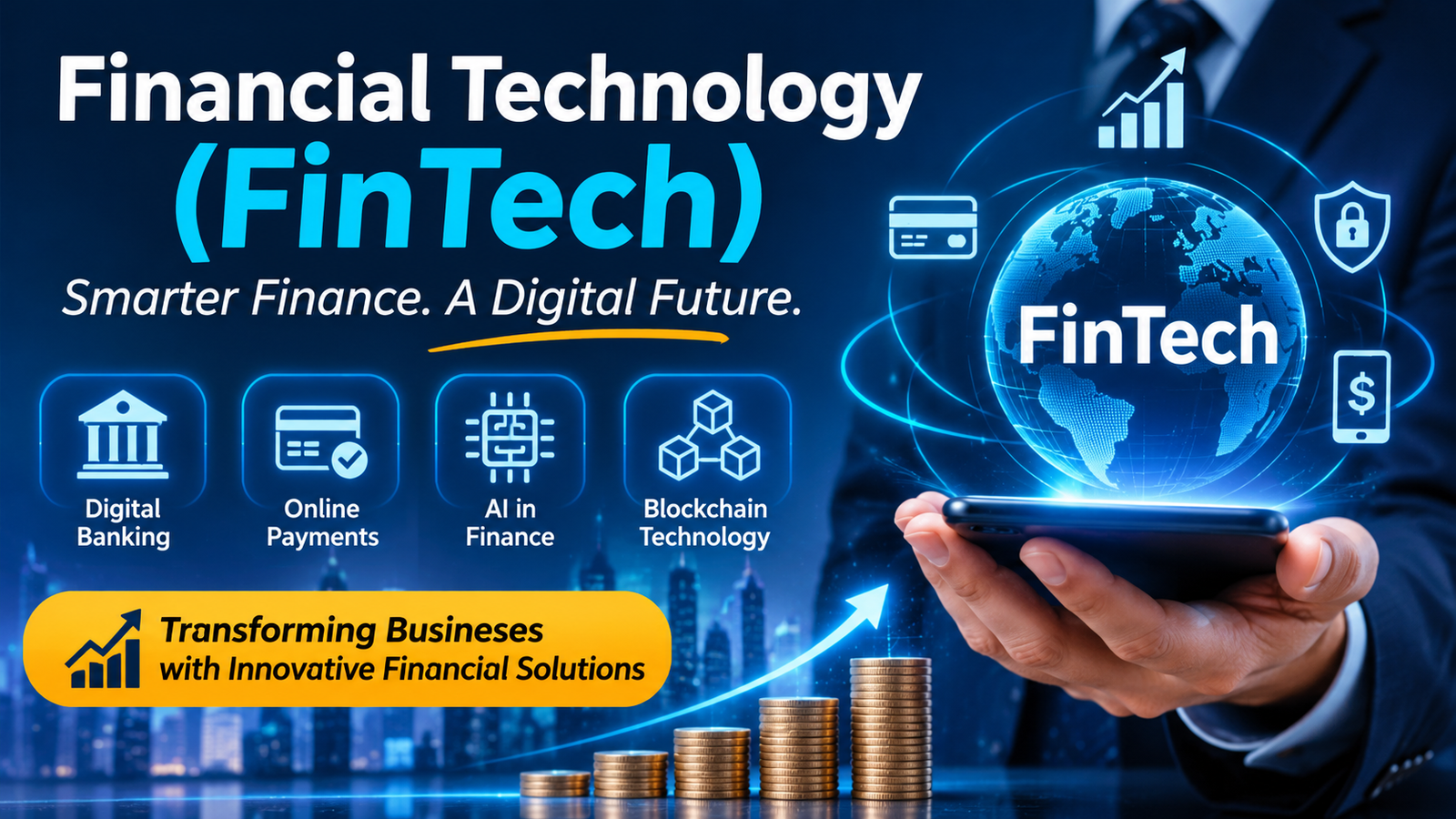
Financial Technology (FinTech): How Technology Is Transforming the Future of Finance
Introduction
Technology is changing every industry and the financial sector is no exception. From banking and digital wallets to online payments and automated investment platforms modern technology has made financial services faster easier and more accessible. This transformation is known as Financial Technology (FinTech).
FinTech combines services with innovative digital tools to improve how individuals and businesses manage money make payments, transfer funds borrow money and invest. Of depending entirely on traditional banking systems and physical transactions people can now access many financial services through smartphones, computers and online platforms.
Financial technology is also creating opportunities, for businesses. Companies can use payment solutions, financial management software and automated systems to simplify operations improve customer experiences and make better financial decisions.
As technology continues to develop FinTech is becoming a part of the global economy. Understanding how it works its benefits and its future potential can help individuals and businesses prepare for a connected financial world.
What Is Financial Technology (FinTech)?
Financial Technology, commonly called FinTech refers to the use of technology to develop, improve and deliver financial products and services. It includes software applications, digital platforms, artificial intelligence, cloud computing, blockchain and other technologies that support activities.
The main purpose of FinTech is to make financial services more convenient, efficient, secure and accessible.
For example when someone transfers money using a mobile banking application pays for products through a wallet or manages investments through an online platform they are using FinTech.
FinTech is not limited to banking. It also supports insurance, lending, accounting, investment management, payment processing and financial planning.
Both startups and established institutions use FinTech solutions to improve their services and meet changing customer expectations.
How Does Financial Technology Work?
Financial technology works by combining software, digital infrastructure and financial systems to complete transactions and manage information.
Most FinTech services operate through websites, mobile applications, payment gateways or integrated business software.
Here is a simple example of how a payment works:
1. A customer selects a product or service from a store.
2. The customer chooses a payment method.
3. The payment platform securely processes the transaction details.
4. The relevant financial institutions or payment providers. Authorize the transaction.
5. The payment result is communicated to the customer and merchant.
Behind this process different technologies work together to protect information verify transactions and transfer funds.
Depending on the service FinTech platforms may also use encryption, identity verification, fraud detection and automated systems to improve security and performance.
Major Types of Financial Technology
The FinTech industry includes important technologies and services. Each category addresses financial needs and helps make financial activities more efficient.
1. Digital Banking
Digital banking allows customers to access banking services through websites and mobile applications without visiting a branch for every transaction.
Users can check account balances transfer funds, review transaction histories, pay bills and manage banking activities online.
Digital banking offers convenience to individuals and businesses by making financial services available through internet-connected devices.
2. Digital Payment Solutions
Digital payment systems have transformed how customers and businesses exchange money. They support purchases, contactless payments, electronic transfers and mobile wallet transactions.
Popular payment methods include wallets, payment gateways, bank transfers and card-based payment systems.
For ecommerce businesses reliable payment processing makes it easier to accept payments from customers and manage transactions.
3. Blockchain Technology
Blockchain is a distributed ledger that records transactions across a network. Information is organized into blocks that are linked together helping maintain a transaction history.
Blockchain technology is commonly associated with cryptocurrencies. Its potential applications also include financial recordkeeping, transaction verification and certain cross-border payment systems.
Its benefits depend on how the technology’s implemented the network design and the applicable regulatory requirements.
4. Artificial Intelligence in Finance
Artificial intelligence (AI) is helping financial organizations analyze information, automate processes and identify transaction patterns.
AI-powered systems can support customer service, fraud detection, financial forecasting and risk assessment.
For example financial institutions can use machine learning models to examine transaction patterns and identify activity that may require verification.
5. Online Lending and Digital Financing
Digital lending platforms allow individuals and businesses to explore financing options through systems.
These platforms may simplify application processes, collect information and support credit assessment.
Automated tools can help lenders process applications efficiently although lending decisions still require appropriate checks and compliance, with financial regulations.
6. InsurTech
InsurTech refers to the use of technology to improve insurance services. Digital insurance platforms help customers explore policies submit applications manage documents and track claims.
Artificial intelligence, data analytics and automation can also help insurance companies improve risk assessment and customer support.
7. Personal Finance Management
Personal finance applications help users monitor spending organize budgets track savings and manage goals.
These tools can provide spending summaries, reminders and financial insights that support money management.
Benefits of Financial Technology for Businesses
technology offers many benefits for businesses of all sizes. Whether a company runs a store offers professional services or manages a large organization, digital financial tools can make daily operations easier.
Faster Financial Transactions
Old financial methods often need paperwork, manual checks. Can be slow. FinTech tools many tasks letting businesses handle payments and transfers faster.
Faster transactions help cash flow. Give customers a smoother experience.
Improved Customer Experience
Customers want flexible payment choices. Digital wallets, banking and mobile payment apps let people finish transactions quickly and without trouble.
Businesses that offer payment options make buying easier, for their customers.
Better Financial Management
Financial management software helps companies keep track of expenses monitor income follow invoices and review how the business is doing.
Automated reporting tools cut out work and give useful data for planning.
Reduced Operational Costs
Automation cuts admin work and boosts the efficiency of financial tasks.
Businesses can save time and money by using invoicing, auto payment processing and online financial management systems.
Greater Financial Accessibility
FinTech platforms can make specific financial services available to people and businesses that have limited access to banking facilities. Mobile applications and online platforms allow users to explore services without always needing to visit a physical financial institution.
The Role of FinTech, in Small Business Growth
businesses often face challenges when managing payments maintaining financial records and organizing daily transactions. FinTech offers solutions that can help address these difficulties.
For example an ecommerce business can integrate a payment gateway to accept customer payments. A service-based company can use invoicing software to send bills and track payments. Retail businesses can use point-of-sale systems to manage sales and transactions.
FinTech also supports better business planning through reporting and analytics. Business owners can review income, expenses and transaction histories to understand their position.
As small businesses continue adopting tools FinTech can become an important part of their growth strategy.
How Financial Technology Enhances Security
Security is one of the important aspects of financial technology. Digital transactions involve information, including personal details, banking information and payment records. Protecting this information is essential for maintaining customer confidence.
FinTech companies use security technologies and procedures to reduce risks.
Some important security measures include:
– Data Encryption: Helps protect information while it is transmitted or stored.
– Multi-Factor Authentication: Requires verification before allowing access to an account.
– Biometric Verification: Uses features such as fingerprints or facial recognition where supported.
– Fraud Detection Systems: Analyze transaction activity to identify suspicious behavior.
– Secure Payment Gateways: Help process online payments through protected payment infrastructure.
However no digital system is completely free from risk. Businesses should regularly update their software follow security practices protect customer information and monitor suspicious activities.
Customers should also use passwords avoid sharing verification codes and access financial accounts through trusted applications and websites.
Challenges Facing the Financial Technology Industry
Although financial technology offers advantages the industry also faces important challenges that organizations must address.
Cybersecurity Threats
Financial platforms can become targets, for phishing, identity theft, malware and other cyberattacks. Companies must invest in security infrastructure. Continuously improve their protection systems.
Regulatory Compliance
Financial services operate under laws and regulations depending on the country and type of service. Financial Technology companies must follow requirements related to customer verification, data protection, financial transactions and consumer rights.
Data Privacy Concerns
Financial applications often collect customer information. Organizations must handle this information responsibly. Explain how customer data is collected, stored and used.
Technology Integration
Technology Integration still relies on software systems. Connecting FinTech solutions with existing infrastructure can require significant planning, development and investment.
Digital Literacy
Digital Literacy is not comfortable for all people when people use banking or digital financial apps. Companies must build interfaces and give proper support so users can understand and use the services.
The Future of Financial Technology (FinTech)
The Future of Financial Technology (FinTech) will likely bring automation, better digital experiences and more advanced financial software solutions.
Artificial intelligence
Artificial intelligence will play a growing role in analysis, fraud prevention, customer support and personalized financial services.
Open banking technologies
Open banking technologies may also give customers chances to link financial services through authorized data‑sharing systems. This can help users manage financial accounts on one platform as long as customers give consent and meet security rules.
Embedded finance
Embedded finance is another development. Embedded finance lets services like payments and lending join non‑financial platforms. For example an ecommerce site may provide payment options during checkout.
Cloud computing
Cloud computing will keep supporting software by giving scalable infrastructure, for apps and data management.
Blockchain‑based services
Blockchain‑based financial services may also grow as organizations look into secure transaction records, digital assets and new payment models.
These technologies
These technologies can make financial services more accessible and efficient. However the success of these technologies will rely on security, responsible innovation, customer trust and regulatory compliance.
Why Financial Software Development Matters
Financial software development is a part of the FinTech industry. Businesses need software applications to manage payments organize financial information and provide digital services to customers.
Professional software development can help create:
– Custom financial management applications.
– Online payment and transaction systems.
– Mobile banking applications.
– Ecommerce payment integrations.
– Automated billing and invoicing platforms.
– reporting dashboards.
– Secure customer account management systems.
A well‑developed financial application should focus on usability, performance, security and scalability. Businesses should work with development teams to ensure their software meets technical requirements and relevant financial regulations.
Frequently Asked Questions (FAQs)
1. What does Financial Technology (FinTech) mean?
Financial Technology (FinTech) means using technology to improve financial services. It includes banking, online payments, mobile wallets, financial applications, blockchain and automated financial management systems.
2. What are some examples of FinTech?
Examples include PayPal, digital banking applications, mobile wallets, online payment gateways, cryptocurrency platforms, investment applications and financial management software.
3. How does FinTech help businesses?
FinTech helps small businesses process payments manage expenses organize invoices monitor transactions and improve operations. It can also reduce work and make financial management more convenient.
4. Is technology secure?
Financial technology platforms use security measures such as encryption, multi‑factor authentication, identity verification and fraud monitoring. However security depends on the platforms implementation and user practices. No system is risk‑free.
5. What is the difference, between banking and digital banking?
Traditional banking generally involves branches and in‑person services while digital banking allows customers to access many financial services through websites and mobile applications.
6. What is the future of FinTech?
The future of FinTech includes intelligence, blockchain applications, embedded finance, open banking, cloud computing and advanced digital payment solutions. These technologies are expected to continue changing how individuals and businesses manage money.
Conclusion
Financial Technology or FinTech is changing how people and companies get, handle and use money services. From banks and online payments to artificial intelligence and blockchain new technology is opening fresh chances across the whole finance world.
For businesses choosing the right FinTech tools can boost work speed make payments easier improve how customers feel and help manage money better.
As digital change keeps moving good software, safe payment systems and fresh financial apps will matter more each day. Companies that see these shifts and pick the technology can get ready for the new money scene.
At Top Solution Today LLC, technology and digital creativity are key, to helping companies grow on the internet. Professional website building, mobile app making and custom digital services can help businesses meet todays customer needs. Find new ways to grow.