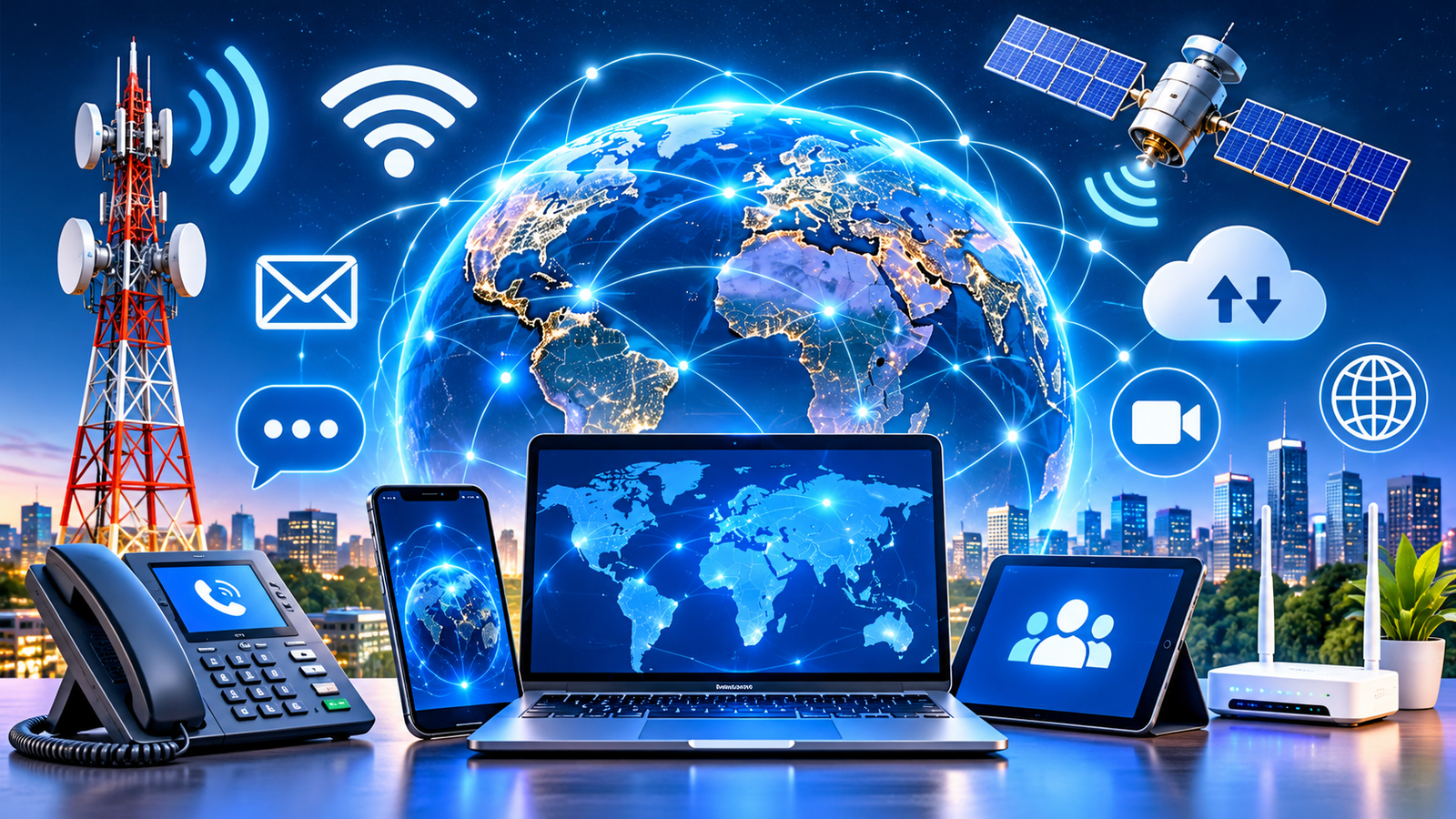
Communication Technology: Types, Uses, Benefits, and Future Trends
Introduction
Communication technology is now a part of daily life. From smartphones and social media to video calls and artificial intelligence Communication technology has reshaped how people talk, share news and meet each other. Today anyone and any company can connect across the globe in a seconds even without being together.
Communication technology means the tools, gadgets, programs and networks that let people, groups and machines talk to one another. Communication is key, in schools, hospitals, companies, shows and daily chores.
As technology keeps growing communication systems are getting quicker more clever and easier to use. Knowing Communication technology, its kinds, its points, its uses and what is coming next lets people and firms use modern tools more wisely.
What Is Communication Technology?
Communication technology is the use of digital systems to send, receive, store and exchange information. It includes devices such as smartphones, computers, tablets, televisions, networking equipment and software and internet-based communication platforms.
Communication technology allows people to communicate by text messages, emails, voice calls, video calls and online collaboration tools. Communication also helps businesses connect with customers manage teams and share information.
For example a company can hold a meeting with international clients using video conferencing software. Similarly students can attend classes and access educational resources through digital communication platforms.
Major Types of Communication Technology
Communication technology includes tools and systems designed for different communication needs. Some of the common types include:
1. Mobile Communication Technology
Mobile communication technology allows people to communicate using devices such, as smartphones and tablets. Mobile networks make it possible to send messages make calls browse the internet and access applications.
Modern mobile communication includes 4G and 5G networks. Mobile communication technology provides internet speeds and better connectivity. Mobile communication technology supports video streaming, mobile banking, online shopping and real-time communication.
2. Internet Communication Technology
Internet communication technology enables people to exchange information through platforms. Email, instant messaging, websites and social media are examples.
Businesses use internet communication technology to connect with customers promote products provide support and share updates. Internet communication technology also allows people to communicate with friends, family and colleagues no matter where they are.
3. Wireless Communication Technology
Wireless communication technology sends information without needing any wires or cables. It relies on systems like Wi-Fi, Bluetooth, cellular networks and satellite communication.
Wi-Fi lets devices connect to the internet. Bluetooth helps nearby devices share data like pairing a phone with headphones. This kind of technology is found everywhere. In homes, offices, hospitals, schools and public areas.
4. Satellite Communication Technology
Satellite communication uses satellites orbiting in space to send signals from one place on Earth to another. It powers TV broadcasts, GPS navigation, weather tracking and communication in faraway or hard-to-reach areas.
This technology is especially helpful in regions where regular internet or mobile networksre weak or not available.
5. Video Conferencing Technology
Video conferencing technology lets people talk to each other using audio and video. Tools like Zoom, Microsoft Teams and Google Meet make it easy for individuals and companies to hold meetings online.
It’s used for working from home, online classes, business talks, job interviews and connecting with teams, across countries.
6. Social Media Communication
Social Media platforms have changed how people share information and interact online. Social Media platforms such, as Facebook, Instagram, LinkedIn and X let people publish content exchange messages and build communities.
Businesses also use Social Media communication to increase brand awareness engage customers and promote Social Media services.
How Does Communication Technology Work?
Communication technology transfers information from one device or user to another through communication networks.
The process generally includes three stages:
Sending Information: A user creates a message makes a call or shares a file through a communication device.
Transmitting Data: The information travels through wired or wireless networks using signals.
Receiving Information: The receiving device processes the transmitted data. Displays it as text, audio, video or another format.
For example when someone sends a message through a messaging application the application transfers the data through the internet to the recipients device. The recipient can then. Respond to the message.
Importance of Communication Technology in Modern Life
Communication technology has become very important because it lets people share information quickly and easily. It keeps people connected gives access to knowledge and helps many different kinds of work.
In life people use communication technology to call family join online meetings post pictures and use digital services.
For companies communication technology helps them talk to customers work together advertise and run tasks. Schools use communication technology to give lessons and doctors use digital communication systems to talk with patients.
Overall communication technology creates a world where information can move fast between people and groups.
Benefits of Communication Technology
Modern communication systems give good points to people, companies and groups.
1. Faster Communication
One of the benefits of communication technology is how fast it is. People can send messages make calls and share files in seconds. This saves time. Makes talking easier.
2. Global Connectivity
Communication technology connects people in countries and time zones. Companies can work with clients while families and friends can stay in touch no matter how far apart they are.
3. Improved Business Productivity
Digital communication tools help workers cooperate, share documents, plan meetings and manage tasks. These tools make work flow better. Help teams work together more smoothly.
4. Easy Access to Information
The internet gives access to learning materials, news, research and professional help. People can find information fast. Learn new skills on digital platforms.
5. Cost Savings
Online meetings, emails and messaging apps cut the need, for traveling, printing papers and expensive ways of talking. This helps companies keep operating costs lower.
6. Better Customer Support
Companies can talk with customers using chat, email, social media and messaging apps. These ways make it easier to answer questions and give help.
Applications of Communication Technology
Communication technology is used in every industry. Its applications keep growing as digital systems get better and smarter.
Communication Technology in Education
Schools and colleges use tools to offer online classes, virtual lectures and digital learning materials. Students can talk to teachers join group discussions and finish their assignments from home or anywhere else.
Communication Technology in Healthcare
Hospitals and clinics use communication systems to share records set up appointments and stay in touch with patients. Telemedicine lets people talk to doctors through video calls when it’s safe and needed.
Communication Technology in Business
Companies use email, video calls, messaging apps and team work tools to talk with workers and customers. These tools help with work, managing projects and building good customer relationships.
Communication Technology in Entertainment
Streaming services, online games, digital TV and social media have changed how people enjoy entertainment. People can watch movies listen to music and join conversations using phones, tablets or computers.
Communication Technology in Transportation
Transport systems use communication, for GPS navigation, traffic alerts, tracking vehicles and sharing travel info. These tools help drivers and passengers get where they need to go smoothly.
Challenges of Communication Technology
Even though communication technology brings benefits there are also challenges that users and organizations need to be aware of.
Cybersecurity Risks: When people communicate online they can face threats like phishing scams hacking attempts and theft of personal data. To stay safe it is important to use passwords and follow basic security steps.
Privacy Concerns: Many digital platforms collect information. Users should take time to review privacy settings. Think carefully before sharing private or sensitive details.
Internet Dependency: Most modern communication tools depend on an internet connection. When the network fails it can disrupt video calls, online learning and important work activities.
Digital Divide: Not everyone has access to the latest devices, fast internet or the skills needed to use digital tools. This gap can make it harder for people in rural areas to take part in everyday communication.
Information Overload: With alerts, messages and updates it becomes hard to stay focused. People often feel overwhelmed by much information coming at once.
Latest Trends in Communication Technology
Communication technology keeps changing with tools and improvements making digital interaction easier and more powerful.
Artificial Intelligence in Communication
Artificial intelligence is playing a role in how people communicate. Chatbots, automated customer service, real-time language translation and voice assistants are all examples of AI helping to improve communication. These tools can answer questions quickly and help businesses handle large volumes of messages.
5G and Advanced Connectivity
The arrival of 5G technology means wireless connections and much lower delays, in data transfer. In areas where 5G’s available it makes high-quality video calls, smart home devices and instant data sharing possible. It supports ways of connecting people and devices in real time.
Internet of Things
The Internet of Things connects devices through the internet so they can share information. Smart homes, devices, industrial sensors and connected vehicles are examples of IoT applications.
Cloud-Based Communication
Cloud communication platforms allow users to access messages, files and collaboration tools through internet-connected devices. They support teams and make information sharing more flexible.
Virtual and Augmented Reality
Virtual reality and augmented reality are creating ways to communicate and collaborate. These technologies can support meetings, interactive training, remote assistance and immersive learning experiences.
The Future of Communication Technology
The future of communication technology is expected to bring intelligent, connected and interactive communication systems. Artificial intelligence, advanced wireless networks, cloud computing and connected devices will continue to influence how people share information.
Businesses will use automated communication systems to improve customer experiences and manage operations. Educational institutions will expand learning opportunities while healthcare organizations will use connected technologies to improve communication, with patients.
However privacy, cybersecurity, accessibility and responsible technology use will remain concerns. The goal should be to make communication more effective while protecting users and their information.
Frequently Asked Questions (FAQs)
1. What is communication technology?
Communication technology is about tools, devices, software and networks that help people and systems send, receive and share information.
2. What are the main types of communication technology?
The main types are communication, internet communication, wireless communication, satellite communication, video conferencing and social media communication.
3. Why is communication technology important?
It makes it easier to talk to people connects people all over the world helps businesses run smoothly gives better access to information and makes organizations work better.
4. How is communication technology used in business?
Businesses use communication technology for meetings helping customers, advertising, working with teams sharing files and allowing people to work from home.
5. What is the future of communication technology?
The future will bring use of artificial intelligence faster 5G connections, cloud communication, the Internet of Things and virtual and augmented reality.
Communication technology has changed how people connect, share information and work together. From networks and the internet to artificial intelligence and cloud-based tools modern communication systems give faster and more flexible ways to exchange information.
Its uses in education healthcare, business, entertainment and transportation show how important it has become in life. Even though there are problems like security, privacy and access to technology using technology responsibly can help people and companies get the most out of communication.
As new ideas keep coming communication technology will be more important, in making a connected and advanced world.