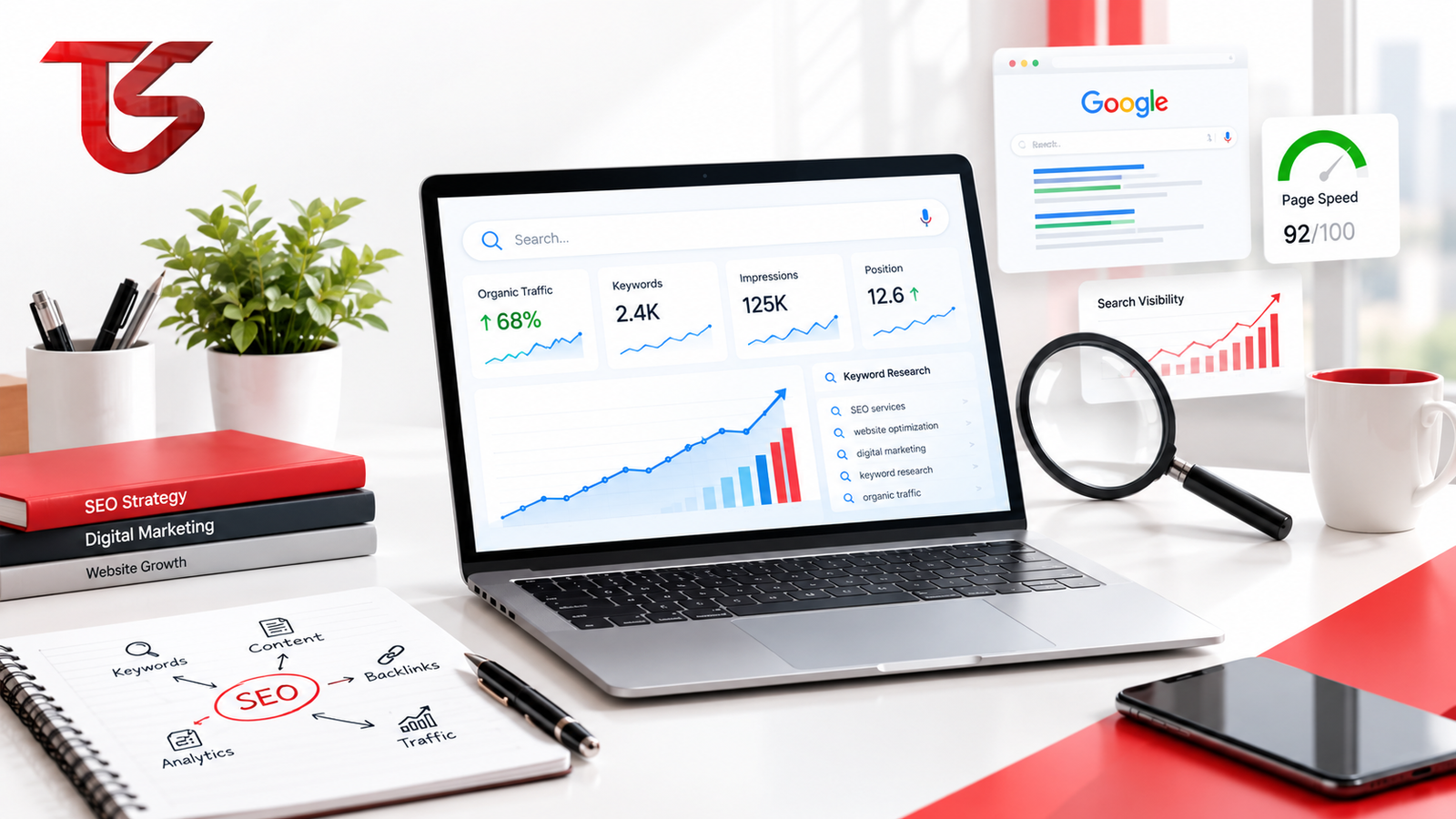
Search Engine Optimization: A Complete Guide to Growing Your Business Online
Introduction
In todays world having a website is just the first step when you want to build a successful online business. People who might become your customers need to find your website when they look for products, services and information that match your field. This is why Search Engine Optimization (SEO) is very important. Explore our SEO services SEO makes your website easier to see in search engine results brings in visitors who’re interested and helps your business grow over time.
No matter if you run a local business an online shop, a company that offers professional services or a business that is growing fast search engine optimization can help you meet people who are already looking for what you have to offer. Of relying completely on money you spend on ads SEO works on making your website better so that search engines can understand what it is, about and so that people can find the information they want.
Learn more about SEO best practices in
Google Search Central documentation
A successful SEO strategy means more than putting keywords on website pages. SEO includes keyword research, creation of high-quality content, technical improvements, website optimization, internal linking, good user experience and building an online presence. Every part of SEO helps make your website more useful easier to find and more relevant to the people you want to reach.
At Top Solution Today we know that businesses need more, than a website to win online battles. Businesses also need a digital strategy that lets the right audience find their services. In this guide you will learn what SEO is, how SEO works, why SEO matters and how to build a SEO strategy that keeps your online growth steady.
What Is Search Engine Optimization (SEO)?
Search Engine Optimization, also called SEO is a way to improve a website so it shows up often in unpaid or organic search engine results. Search Engine Optimization involves making website content easier to read boosting speed arranging information clearly and giving visitors a good experience.
When a person looks up a phrase like ” marketing services,” “best accounting software,” or “website design company near me ” search engines look at many clues to decide which pages may answer the persons query best.
SEO helps businesses make their web pages relevant easy to find and useful, for these searches. Although no SEO professional can promise a ranking, a well planned SEO plan can boost a website’s chance to compete for relevant search terms.
How Does Search engines optimization Work?
Search engines optimization usually follow three stages when they discover and show website content.
1. Crawling
Search engines use automated programs often called crawlers or bots to find pages across the internet. They can find pages through links, sitemaps and URLs that are already known. If important pages are blocked or hard to reach search engines may have trouble finding them.
2. Indexing
After a page is found a search engine optimization may examine its text, images, links and other data to decide if it should be added to its index. Being indexed means a page might show up in search results.. Indexing does not ensure that it will rank for a specific keyword.
3. Ranking
When someone types a query the search engine looks at the pages to decide which results are most relevant and useful. Different queries involve signals, such, as relevance, content quality, usability and context.
Understanding these stages helps businesses see why SEO needs a mix of content, technical tweaks and constant monitoring.
Why Search Engine Optimization Matters for Business Growth
SEO can support business growth by helping potential customers find your products, services and expertise when they search online. It is especially useful for businesses that want to grow their reach beyond customers.
1. Increase Organic Website Traffic
Organic traffic comes from search results. When your website shows up for searches people may visit your site to learn more about your offerings, compare options or get answers to their questions.
The goal is not just to bring in visitors. It is to attract people who are looking for solutions you provide. When the right audience finds your site it leads to chances of getting inquiries, sign-ups, bookings and sales.
2. Improve Online Visibility
Many customers look online before they call or visit a business. If your website appears in search results, for industry-related keywords more people have a chance to see your brand.
With SEO work you can increase visibility across different parts of your site—like service pages, helpful blog posts, product listings and local searches. This helps you stay top of mind when people are making decisions.
3. Build Trust and Credibility
Users often see well organized websites as more trustworthy. Helpful content, business information secure browsing, accurate contact details and a good user experience can strengthen trust in your business. Search rankings alone do not guarantee trust. Businesses should also show their experience explain their services clearly and give information that customers can evaluate.
4. Support Long-Term Marketing Goals
Paid advertising can create visibility while a campaign is active. Organic SEO builds a lasting online presence. A useful article or optimized service page may keep attracting visitors after publication even though its performance can change over time. SEO still needs investment in content, maintenance, research and improvements. Its value comes from building a website and, from improving its ability to bring relevant search traffic over time.
5. Reach Customers at Different Buying Stages
Some customers are just starting to learn about a problem. Others are looking at options or getting ready to buy. SEO helps you make content that fits each stage of their journey.
For example an article about website speed can draw in people who are researching performance issues. A service page that talks about website development can help visitors who are comparing companies. A clear pricing page can support users who’re close, to making a decision.
When you understand what your customers want at each step you can create content that answers their questions when they need it.
The Main Types of Search Engine Optimization
A full SEO plan covers linked parts. Each part has its job and the best outcomes usually happen when we tackle all parts together.
On-Page SEO
On-page SEO means making each page on a website useful and easy to understand. On-page SEO covers page titles, headings, text, pictures, internal links and other items that help visitors and search engines see what the page is about.
Important on-page SEO practices include:
– Write relevant SEO titles.
– Create useful meta descriptions.
– Use a heading structure.
– Insert target keywords naturally.
– Answer the visitor’s main question.
– Add descriptive image alt text when needed.
– Link to related pages on your website.
– Make page content to scan and understand.
For example a web design company that works with businesses could make a service page titled “Website Design Services, for Small Businesses.” The page should explain the service show the steps the company uses answer questions and lead visitors to the next useful step.
The goal is not to repeat keywords over. The goal is to make each page’s purpose clear while giving value.
2. Off-Page SEO
Off-Page SEO means doing things outside of your website to boost its reputation and how well it shows up in searches.
A key part of Off-Page SEO is earning trustworthy backlinks from other sites.
A backlink is a link that points from one site to another. Search engines look at links as clues when they judge how strong a page is.. Not every link is equally useful. Buying links that try to trick the system can break search engine rules.
Ethical Off-Page SEO strategies include:
– Publishing research or useful resources.
– Building relationships with relevant industry publications.
– Earning mentions from legitimate business partners.
– Contributing expert insights to appropriate publications.
– Creating content that others naturally want to reference.
– Maintaining accurate business information across relevant directories.
The goal should be to earn helpful recognition not just to pile up many links. Off-Page SEO is, about quality, not quantity.
3. Technical seo
Technical SEO is about making it easier for search engines to find scan and understand your website. It also deals with problems that might make it hard for people to use your site.
Important areas of SEO are:
Website speed: If pages load too slowly people get upset. You can make your site faster by optimizing pictures cutting down on code and improving the hosting service.
Usability: Your site needs to work well on all kinds of devices like phones and tablets.
HTTPS security: A secure connection keeps the information between a visitor’s browser and your site safe.
XML sitemap: A sitemap helps search engines find the pages on your site.
Robots.txt: This file tells search engines how to crawl your site. It needs to be set up so that important pages aren’t accidentally blocked.
Urls: These tags help show which version of a page is the main one when there are similar or duplicate pages.
Redirects and broken links: redirects and checking links often help people find the right pages.
Structured data: Using data can help search engines understand specific details, about a page. It doesn’t always mean search results.
Technical SEO matters a lot for websites online stores and sites that use custom themes or complicated content management systems.
4. Local SEO
Local SEO helps businesses get seen more when people search for things in an area. It is very helpful for companies that offer services, restaurants, shops, builders and places where professionals work.
For example if someone searches for ” marketing agency in Harrisonville, MO ” they probably want to find a company close by, not just a general article about marketing.
Key local SEO tips are:
Make sure to create and keep a Google Business Profile that meets the requirements.
Ensure the business name, address, phone number and hours are correct.
Make pages that talk about the location and the services offered.
Get reviews from customers without trying to trick the system.
Answer customer comments in a way.
Keep the business details on the websites that matter.
Write content that solves problems for people, in the area.
Local search results can be affected by how relevant the businesss how far away it is and how well-known it is. Companies need to give details and not make fake pages or fake business listings.
5. Content SEO
Content SEO focuses on creating and improving information that satisfies the needs of your audience. This covers blog posts, guides, service pages, product descriptions case studies and asked questions. High-quality content should be original, accurate, clearly written and suitable for the audience. Content SEO should answer the searcher’s question, not just exist to include keywords. For example an SEO agency could write articles, about keyword research, website audits, local SEO and measuring performance. These resources can teach customers and show the agency’s expertise.
Keyword Research: The Foundation of a SEO Strategy
Keyword Research is the process of finding the search words people use when they look for information, products or services. Keyword Research helps you see what your audience needs and choose which topics deserve their pages.
Understand Search Intent
Search intent explains what a person wants to do when they search. Understanding Search intent helps you pick the type of content.
– intent: The user wants to learn something. Examples are “what is SEO” and “how does keyword research work.”
– intent: The user wants to find a specific website or business. An example is searching for a company name.
– Commercial investigation: The user is comparing possible solutions. Examples are ” SEO tools for small businesses” and “website design company comparison.”
– Transactional intent: The user is ready to take an action, such as buying a product or hiring a service provider. Examples are “hire an SEO agency”. Buy ecommerce hosting.”
Your content should match the purpose, behind the search. A person looking for a definition usually needs a guide while someone ready to hire an agency usually needs a detailed service page.
Choose Relevant Primary and Supporting Keywords
A main keyword shows what a page is about. Related words and phrases are called supporting keywords. They talk about ideas, questions or ways to look at the topic. These help make the writing better and more complete.
For an article, about Search Engine Optimization, the main keyword could be “Search Engine Optimization.” Other words that support this topic might be:
– SEO services
– On-page SEO
– Technical SEO
– Local SEO
– Keyword research
– Organic search traffic
– SEO strategy
– Website optimization
– SEO audit
– Search engine rankings
Use these words where they make sense. There is no one-size-fits-all rule for how to use keywords. Using a word many times can make writing hard to read. It can also seem like trying to trick people of helping them.
Research Keyword Competition
Keyword competition can be very high especially when broad terms are used by known sites. Small businesses can find chances in specific searches that match their services, audience or local area.
For example of chasing only the word “SEO ” a local agency may craft content for phrases like “local SEO services for small businesses” or “SEO services, in Harrisonville, MO.”
These phrases are examples. They do not guarantee keyword competition or high search volume. Use keyword research tools and real search results to check the demand, relevance, keyword competition and user intent before making a choice.
How to Optimize Your Website for Search Engines
Once you know who your audience is and what keywords they use the next step is to make your website pages better for search engines.
1. Write Clear SEO Titles
An SEO title helps tell search engines and people what a page is about. It might show up as the headline people click on in search results. Search engines can also create a different title if they think it’s better.
A good title needs to be clear easy to read and connected to the page.
For example:
“Search Engine Optimization: A Complete Guide for Businesses”
This title shows what the page is about and tells readers what to expect.
Avoid titles that’re unclear repeat things unnecessarily or promise something the page doesn’t deliver. There is no one number of characters that ensures the title will look the same on all devices.
2. Create Meta Descriptions
A meta description gives a short summary of the pages content and might be shown as the text under the title in search results. Search engines can also make their summary based on the question and the page content.
A good meta description tells the reader what they will learn or get from the page. It should be correct, short. Match the page.
Example:
“Learn how search engine optimization helps websites get visibility by using keyword research, content improvement, technical SEO and local search methods.”
Make sure each important page has a description instead of using the same text, on every page.
3. Organize Content with Headings
Headings make it easier for readers to follow the flow of your content. They also help search engines understand how different parts of your page connect. A structured page is more likely to rank higher and be useful to visitors.
Start with one heading, known as an H1 that clearly states the topic of the page. Then use subheadings like H2 and H3 to break the content into sections.
For example:
H1: Search Engine Optimization: A Complete Guide
H2: What Is Search Engine Optimization?
H2: Why SEO Matters for Business Growth
H2: Types of SEO
H3: On-Page SEO
H3: SEO
Each heading should accurately describe what comes after it. Don’t use headings to include keywords. The goal is clarity and usefulness not keyword stuffing.
4. Optimize Images
Images can improve your content by making it more engaging and easier to understand.. Big image files can slow down your website, which hurts user experience and search rankings.
Use images that are sized correctly and saved in formats like JPEG, PNG or WebP. This reduces file size without sacrificing quality.
Always write alternative text or alt text for meaningful images. Alt text helps people who use screen readers understand what’s in the image. It also supports accessibility. Can improve your sites visibility in search results.
If an image shows a report on website performance use alt text, like “Website performance report showing page loading metrics.” Be specific and accurate.
For images that don’t add any information—like a background graphic or a border—use empty alt attributes. There’s no need to fill them with keywords. Avoid repeating the keyword across every image just to boost rankings. That can hurt both usability and your site’s credibility.
5. Improve Internal Linking
links are connections between pages on your own website. They help people find content and guide search engines to important parts of your site.
For instance this article could link naturally to your SEO services page your website design services or other helpful guides.
Always use anchor text. That means the clickable words should explain what the user will find when they click. Avoid phrases like “click or “read more.” Instead say something like “learn about SEO strategies” or “see our design portfolio.”
Make sure key pages are not left alone. Check that internal links lead to the places. Internal linking should make navigation easier not confuse the user. Avoid many links on one page. Keep it clean and useful.
6. Make URLs Clear and Descriptive
A good URL helps users know what a page is about before they click.
For example:
example.com/search-engine-optimization/
This is much clearer than a URL like:
example.com/p=123456789
Use meaningful slugs. Keep your URL structure consistent, across the site. If you ever change a URL pay attention to how traffic it gets where it’s linked from and how it’s indexed.
If you do change a URL set up a redirect. This keeps users and search engines from getting lost. It also protects your SEO value. Keep URLs simple, readable and relevant.
7. Create Content That Satisfies User Needs
Search optimization should begin with the reader’s needs. Before publishing a page ask:
– Does content answer the question?
– Is the information accurate and current?
– Does content provide details beyond generic statements?
– Can readers easily understand the next step?
– Is the page different from other pages on my website?
– Does content demonstrate appropriate experience and expertise?
Avoid making pages that are almost the same just to target small keyword variations. A few useful organized pages can be more valuable than many repetitive pages.
The Role of High-Quality Content, in SEO
Content is one of the ways businesses demonstrate their expertise and answer customer questions. However publishing frequently does not automatically lead to rankings. Content quality, relevance, usefulness and the overall website experience matter.
Create Content for Your Target Audience
Start by finding out the questions that customers ask before they pick a product or service. These questions can turn into blog topics, sections, on service pages, guides or FAQs.
A web development business might publish Content about choosing a website platform improving usability keeping a website secure and planning an ecommerce project.
Every piece of Content should have a purpose and give practical information.
Demonstrate. Expertise
When it is appropriate include examples of projects, documented processes original observations and insights from people with relevant experience. Make claims that can be backed up and avoid treating assumptions as facts.
For instance a case study might describe a website’s challenge the work that was done and the results that were measured. If you share performance improvements state the time period over which you measured and the relevant context, of implying that every Audience member will see the same outcome.
Keep Important Content Updated
Some topics change often. Others stay the same for a time. Check pages when facts are no longer true services have changed links stop working. People start needing different things.
Updating a page should make it more helpful. Just changing the date without adding value does not improve the content.
Avoid Keyword Stuffing
Keyword stuffing means using search phrases many times in a way that feels forced. This can make text hard to read. Could break rules from search engines, about spam.
Instead use the keyword where it fits naturally. Then explain the topic with words, real examples and straight answers.
The best content is written to help people first. It should be clear and useful. After that it can be adjusted to help search engines understand its purpose.
Mobile Seo and User Experience
A website must function properly for visitors who use a range of devices. Mobile usability is crucial because many people browse, research and shop using smartphones.
A responsive website changes its layout to fit screen sizes. Text should be easy to read buttons should be simple to tap and navigation should not require zooming or horizontal scrolling.
Pay attention to:
page layouts.
Readable font. Sufficient spacing.
Easy-to-use. Forms.
Fast loading of content.
Accessible color contrast.
Clear calls to action.
Consistent content across mobile and desktop versions.
Google mainly uses the version of a website, for indexing. If the mobile version omits text, images or metadata it can alter how the page is understood.
User experience also depends on how visitors can find what they need. A impressive website is not effective if visitors cannot locate service details, contact information or the next step.
Website Speed and Core Web Vitals
Website Speed affects how easily people can interact with your pages. Slow loading, unexpected layout shifts and delayed responses can make a website frustrating to use.
Googles Core Web Vitals measure aspects of real-world user experience:
– Largest Contentful Paint (LCP): Measures loading performance.
– Interaction to Next Paint (INP): Measures responsiveness to user interactions.
– Cumulative Layout Shift (CLS): Measures stability.
These Core Web Vitals are indicators but they do not provide a complete assessment of website quality.
You can investigate Website Speed using tools such as Google PageSpeed Insights and Lighthouse. Potential improvements include resizing images using image formats reducing unnecessary JavaScript improving caching and reviewing third‑party scripts.
Avoid making changes based on a single score. Test Website Speed on devices where possible and prioritize improvements that make the experience faster and more reliable for actual users.
Local SEO: Attract Customers in Your Service Area
SEO is especially important, for businesses that serve customers in particular cities, regions or neighborhoods.
A strong Local SEO strategy starts with business information. Eligible businesses can create a Google Business Profile. Keep its details current, including categories, service areas, opening hours contact information and relevant photos.
Your website should also explain what you offer and where you operate. A location page should contain local information rather than simply replacing a city name on multiple identical pages.
– Build a Strong Local Presence
– local SEO actions include:
– Keep business details correct on all important websites.
– Make service pages that clearly show what you actually offer.
– Give information to people who live in the area.
– Ask customers to leave reviews when it makes sense.
– Answer reviews in a way.
Get mentions and links from websites that are related.
Check how well the business is doing in searches and handle customer questions.
For example a company that works in Harrisonville, Missouri can talk about its marketing services, the kinds of businesses it works with and how customers can get in touch with the team.
Local SEO does not make sure a business will be at the top of Google Maps. The ranking changes depending on what someone’s searching for, where they are, how many other businesses are competing and other things.
SEO for Ecommerce Websites
Ecommerce SEO helps online stores get better at showing up in search results when people look for products and categories. Since stores usually have a lot of web pages they need a way to handle content and technical parts.
Optimize Product Pages
Each important product page must have descriptions. Include specifications. Show images. Add pricing information where needed. Provide delivery or return details.
Do not copy generic manufacturer descriptions. Instead add your useful information, for customers. Give them value. Help them make choices.
Improve Category Pages
Category pages help users find products. Each important category should have a purpose. Make sure visitors can easily navigate to the products they want.
Keep the layout simple and focused. Use headings. Group products logically. Avoid clutter. Make it easy to scan.
Manage Duplicate and Filtered URLs
Ecommerce websites often create URLs. Sorting, filtering, tracking parameters and product variations can all lead to versions of the same page.
Many URLs can confuse search engine crawlers. It can also hurt indexing. This makes it harder for users to find your content.
Use a technical strategy. Set up URLs correctly. Use links wisely. Manage how search engines crawl your site.
The right setup depends on your stores structure. It also depends on which pages should show in search results.
Be consistent. Keep things clean. Avoid content. This helps search engines and users both.
Use Structured Data Where Appropriate
Product structured data can help search engines understand details such as product name, price, availability and review information when those details are accurately represented on the page.
Structured data does not guarantee search-result features. Keep markup consistent with content and follow the relevant search engine guidelines.
How to Measure SEO Performance
SEO requires monitoring because search behavior, competition, website content and search engine systems can change. Measuring performance helps you identify what is working and where improvements may be needed.
Google Search Console
Google Search Console provides information about how your website performs in Google Search. Depending on the report you can review clicks, impressions, click-through rate, average position, indexing issues and search queries.
Use this information to identify pages that receive impressions but few clicks, pages that have lost visibility and queries that reveal content opportunities.
Average position is a diagnostic metric but it does not represent a fixed ranking for every user or search.
Google Analytics
An analytics tool can help you understand what visitors do after arriving on your website. You can measure actions such, as form submissions, purchases, calls or other conversions depending on your setup.
Make sure tracking is configured correctly and respects privacy requirements. Traffic alone does not explain whether your SEO is generating business value.
Track Meaningful KPIs
SEO performance indicators that help may include:
SEO clicks and qualified visits.
SEO search impressions for queries.
SEO performance of landing pages.
Sales that come from organic traffic.
Conversion rate from visitors.
Crawling issues.
Engagement with content.
Local. Actions that can be measured.
Choose SEO metrics that connect to your business goals. A local service provider may prioritize leads while an ecommerce store may focus on organic revenue and product‑page performance.
Common SEO Mistakes to Avoid
well‑designed websites can struggle if important SEO fundamentals are overlooked.
1. Targeting the Wrong Keywords
A high‑volume keyword may attract visitors who’re not interested, in your services. Choose keywords based on relevance, intent, competition and business value than search volume alone.
2. Publishing Repetitive Content
Pages that provide little useful information may fail to meet users’ needs. Review overlapping content and improve or consolidate pages when doing so creates a more valuable resource.
3. Ignoring Technical Issues
links accidental noindex directives, blocked resources, wrong redirects and slow pages are Technical Issues that can interfere with crawling, indexing or user experience. I conduct technical checks and resolve problems according to their impact.
4. Buying Manipulative Backlinks
Backlinks that are bought purely to manipulate search rankings can break search engine spam rules. I focus on relationships original resources and earned references.
5. Expecting Instant Results
Instant Results from SEO are not guaranteed. I know that some improvements may show up fast but competitive keywords and new sites may require a lot time. Results depend on the website, competition, content quality, technical condition and many other factors.
6. Neglecting Existing Content
Existing Content may hold facts, broken links, weak examples or data that no longer meets user needs. I review content to find ways to improve its usefulness and performance.
7. Ignoring Conversion Optimization
Conversion Optimization goes beyond attracting visitors. A website must also make it easy for users to understand your services and take the step. I use calls, to action simple forms, transparent service information and a trustworthy design. I measure whether these improvements help users complete actions.
SEO Tools That Can Help Your Business
The right tools make it easier to research keywords identify issues understand search performance and prioritize improvements.
Google Search Console: Helps monitor Google Search performance, indexing information and certain technical issues.
Google Analytics: Helps analyze website traffic, user behavior and conversions when correctly configured.
Google Keyword Planner: Provides keyword ideas and advertising-related search estimates. Its figures should be interpreted in context when planning SEO.
Google Trends: Helps explore changes in search interest over time. Compare topics.
Google PageSpeed Insights: Evaluates page performance and provides recommendations for improving user experience.
Screaming Frog SEO Spider: Can crawl a website to help identify issues such as links, missing titles, redirects and other page-level problems.
Yoast SEO: A WordPress plugin that helps manage SEO titles, meta descriptions, canonical settings, XML sitemaps and content-analysis recommendations depending on the configuration and version.
SEO tools provide information but they do not replace judgment. A tool may flag a missing keyword or short paragraph when a page is useful to visitors. Use recommendations as guidance not as a substitute, for quality, accessibility and sound technical implementation.
How to Create a SEO Strategy
A practical SEO strategy begins with clear goals and a realistic view of your website.
Step 1: Audit Your Website
Look at pages the technical health of your site how well it is indexed how fast it loads, how it works on mobile the quality of the content and the internal links. Spot the problems that will hurt users or stop search engines from reading your site.
Step 2: Research Your Audience
Find the customers you want to reach the questions they ask the problems they need solved and the services or products they look for.
Step 3: Select Target Keywords
Pick keywords that fit each page. Think about what the user wants how many people search for it how hard it is and whether your page can give an answer.
Step 4: Map Keywords, to Pages
You should give each page a main job. A service page should focus on its service; a blog post should answer one question.
This cuts. Helps you build a more organized SEO site.
Step 5: Improve On-Page Elements
Check titles, meta descriptions, headings, URLs, images, internal links and the main text. Make sure every page states its job clearly.
Step 6: Resolve Technical Problems
Check if key pages can be crawled and indexed. Fix errors, broken links, unintended indexing blocks and performance issues in order of importance.
Step 7: Publish Useful Content
Make content that actually answers customer questions. Use examples clear explanations, correct facts and simple steps people can take next.
Step 8: Build Relevant Authority
Get mentions and backlinks by sharing helpful resources building strong relationships and doing honest business work. Stay away, from tricks meant to boost rankings
Step 9: Monitor Results
Look at Search Console and analytics to see how top pages are doing. Watch trends over time of judging progress from just one day or a single ranking check.
Step 10: Refine Your Strategy
SEO never stops. Update content when needed fix problems as they appear grow topics that work well and improve pages that bring in the wrong visitors or don’t meet their goals.
How Long Does SEO Take to Show Results?
There is no timeline for SEO. Some technical changes may help search engines find content easily while getting better visibility for tough search terms can take much longer.
Results depend on things like the history of the website, how competition there is, how good the content is, how healthy the website is technically how much demand there is in the industry and how much effort is put into optimizing.
A new website may need time to build up content and reputation. An older website may find chances through internal linking, better content or technical changes.
Stay away from people who say they can guarantee spot rankings or promise a certain amount of traffic by a certain date. A good SEO plan sets goals explains the work that needs to be done and shares progress in an honest way.
Should You Hire a Professional SEO Agency?
Handling SEO in-house can be possible for companies that have the time, knowledge and resources to do research create content make improvements and report on results. However an experienced SEO team can help figure out what to focus on and organize work across the website.
A professional SEO agency can help with:
Researching keywords and planning content.
Checking the website. Giving technical advice.
Improving pages for search engines.
Managing SEO and business profiles.
Planning content strategies and editorial schedules.
Getting links the way.
Tracking. Providing reports.
Making changes that help with conversions.
Before you hire an agency ask how it measures success what it will do how often it shares results and if it follows the rules of search engines.
Be careful about promises of rankings unclear link-building offers and reports that only show things like page views. Your plan should connect SEO work to results like more leads, more sales and better visibility.
At Top Solution Today companies can look into marketing options that help their online presence, including SEO, website design and other digital services. The best mix depends on the website, the industry the people they want to reach and their goals, for growing the business.
The Future of SEO: User Needs, Quality and AI Search
Search experiences keep changing as search engines add ways to show information and as users use AI tools to find answers.
These changes make content that’s useful well organized and accurate more important. Businesses should focus on helping people understand a topic of making pages only to target search phrases.
Practical priorities include:
Answer questions in an direct way.
Publish information and helpful examples.
Show expertise and experience.
Keep business and service details accurate.
Organize content with headings.
Keep pages accessible and technically sound.
Review analytics to see how people find and use content.
No special wording trick guarantees that AI will include your content. Good SEO basics can help search systems understand your content but being seen in search results and AI experiences is not guaranteed.
Of chasing every new trend build a website that offers reliable information shows its expertise and helps visitors reach their goals.
Frequently Asked Questions About Search Engine Optimization
What is SEO in words?
SEO is the process of improving a website so that search engines can understand it and people can find its pages, in unpaid search results.
Why is search engine optimization important?
SEO helps businesses improve visibility attract relevant visitors answer customer questions and create opportunities for leads or sales over time.
SEO helps businesses improve visibility. It attracts visitors who are looking for what the business offers. SEO answers questions that customers ask. It also creates chances for leads or sales over time.
What are the four main types of SEO?
Four discussed areas are on-page SEO, off-page SEO, technical SEO and local SEO. Content SEO is also a part of many SEO strategies.
The four main areas of SEO are on-page SEO, off-page SEO, technical SEO and local SEO. Many people also talk about content SEO as a part of their strategies.
Is SEO better than paid advertising?
Neither is automatically better for every business. Paid advertising can generate visibility while campaigns run whereas SEO focuses on improving visibility over time. Many businesses use both depending on their goals, budget and timeline.
Both SEO and paid advertising have their strengths. Paid advertising shows your ad while the campaign is live. SEO builds visibility slowly but steadily. Most businesses mix both tools depending on their goals how money they can spend and how fast they want results.
Can I do SEO myself?
Yes. You can learn keyword research improve page titles publish content fix basic technical issues and monitor performance using available tools. Complex websites may require specialist technical support.
You can do a lot of SEO yourself. Learn keyword research improve page titles publish content fix simple technical problems and keep track of performance with free tools. If your site is more complex you might need a specialist.
Does SEO guarantee first-page rankings?
No. Search engines control their ranking systems and results depend on factors. A reputable SEO provider should explain its process and goals without promising guaranteed positions.
SEO does not promise first-page rankings. Search engines decide where pages appear based on factors. A trustworthy SEO provider will explain the process. Set realistic goals not guarantee a spot, on the first page.
How often should I update my website content?
Review content according to its importance. How quickly the information changes. Update pages when facts become outdated links break services change or new information would make the page more useful.
Update your pages when the information is no longer accurate when links are broken, when services change or when new facts can make the page better. The frequency depends on how the content becomes outdated.
What is the difference between on-page and off-page SEO?
On-page SEO focuses on parts inside your site, such as content, titles, headings and links that go to pages on the same site. Off-page SEO focuses on signals outside your site, such as getting mentions and links from other sites.
How do I check my websites SEO performance?
Google Search Console lets you look at how times your pages appear in search results how many clicks they receive, which queries bring traffic and whether pages are indexed. Analytics tools let you see how visitors act on the site and whether they complete the goals you set long as tracking is set up correctly.
Is local SEO useful for businesses?
Yes. Local SEO helps businesses that serve an area become more visible when people search for services nearby. Having business details helpful local pages and real customer reviews can build a stronger local presence.
What is the role of keywords, in SEO?
Keywords describe the topic of a page. The search phrases people use to find it. Keywords should fit naturally into content instead of being repeated too many times.
Can AI-generated content rank on Google?
Content is evaluated based on its usefulness and compliance with search policies not on whether AI helped create it. AI-generated content should be reviewed for accuracy originality, usefulness and relevance before it is published.
Build a Stronger Online Presence with SEO
Search Engine Optimization is a part of building a sustainable digital presence. Search Engine Optimization helps businesses improve discoverability organize website content address problems and connect with people searching for relevant information or services.
An effective SEO strategy combines keyword research, content, on-page optimization, technical SEO, internal linking, local visibility and performance measurement. No single tactic guarantees success. Consistent improvements, realistic expectations and a focus on visitor needs create a foundation, for long-term growth.
Whether you are launching a website or improving an established business start by understanding your audience and identifying the most important opportunities. Make your pages clear, useful, accessible and technically sound then measure results. Refine your approach.
Top Solution Today helps businesses explore marketing solutions designed to strengthen online presence. If you want to improve website visibility and create an effective digital strategy explore our SEO and website design services to find solutions that fit business goals.
Take the step: Review your website identify highest-priority SEO opportunities and build a practical plan to help more relevant customers discover your business online.